
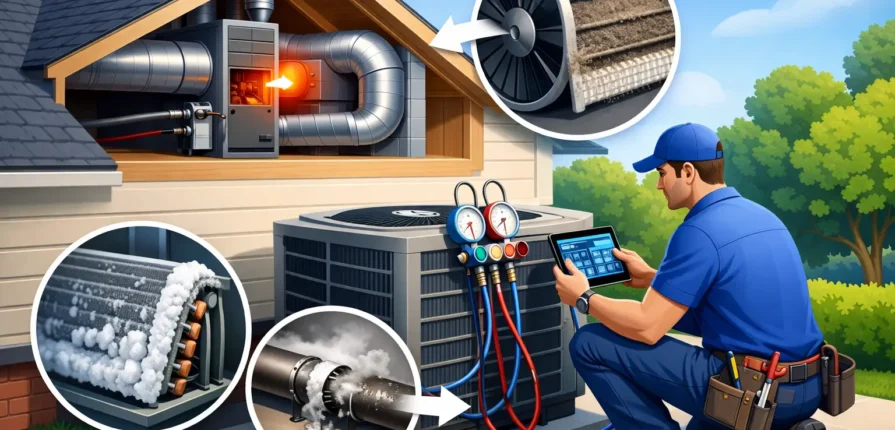
Your furnace starts but never seems to catch up. Your AC runs for hours and leaves one room warm. Or maybe the system quit at the worst possible time. Delaware Ohio HVAC diagnostics should do more than identify a failed part. They should explain why the problem happened, what it will take to fix it, and whether a repair makes sense for your system.
At Professional Trade Service, we approach comfort problems the practical way: inspect the equipment, test the components, check the conditions around the system, and give you a straight answer. A quick guess can lead to repeat breakdowns, wasted money, and another uncomfortable day. A proper diagnosis gets to the cause before repairs begin.
What HVAC Diagnostics Actually Include
A heating or cooling problem is not always as simple as replacing the part that stopped working. A weak capacitor may keep an air conditioner from starting, but a dirty condenser coil or failing motor could be putting extra strain on that capacitor. A furnace pressure switch may be open because of a venting issue, not because the switch itself has failed.
That is why a technician should look at the whole system. The diagnostic process typically starts with your description of the issue: when it began, whether it is constant or intermittent, what sounds or odors you have noticed, and whether the thermostat is showing an error. Those details matter. A unit that fails only during the coldest night of the year may have a different issue than one that stops every afternoon.
From there, the technician checks thermostat operation, electrical connections, safety controls, filters, airflow, drain lines, and the condition of key heating or cooling components. On an AC system, that can include checking refrigerant performance, capacitors, contactors, blower operation, and outdoor unit condition. On a furnace, it may include testing ignition, flame sensing, gas delivery, limit switches, inducer operation, and venting.
The goal is not to make the visit longer than it needs to be. It is to avoid replacing a part without knowing if it is the real reason the system failed.
Common Problems We Find During HVAC Diagnostics
Some comfort issues show up in obvious ways. Others build slowly until the system finally gives out. If you are noticing any of the following, it is time to schedule service rather than wait for a total shutdown:
- The system runs constantly but the temperature barely changes.
- Your utility bills rise without a clear reason.
- The furnace or AC turns on and off repeatedly.
- Airflow is weak from some or all vents.
- You hear banging, squealing, grinding, or buzzing noises.
- The unit leaks water, produces unusual smells, or trips a breaker.
- Certain rooms are much hotter or colder than the rest of the building.
A clogged filter can cause poor airflow, but so can a failing blower motor, blocked ductwork, a dirty evaporator coil, or an improperly sized system. Short cycling may be tied to an oversized unit, thermostat trouble, overheating, low refrigerant, or a safety control doing its job. The symptoms can look similar. Testing is what separates a real diagnosis from a guess.
For homeowners, that difference can save money. For property managers and small business owners, it can also prevent a comfort complaint from turning into downtime, tenant frustration, or an emergency call after hours.
When a Small Issue Becomes an Emergency
Not every HVAC problem needs immediate service, but some should not wait. If you smell gas, suspect carbon monoxide, see smoke, hear loud electrical arcing, or have a system repeatedly tripping breakers, turn the equipment off and call for help. Do not keep resetting a breaker or trying to force the system to run.
During a Delaware County winter, a furnace that will not produce heat can quickly become more than an inconvenience. In summer, an AC failure can be especially hard on young children, older adults, pets, and anyone with health concerns. Professional Trade Service provides 24/7 emergency availability when your heating or cooling problem cannot wait until normal business hours.
Emergency service is about getting safe, dependable operation restored as quickly as possible. Depending on the issue, that may mean a repair during the visit, a temporary solution to protect the property, or a clear plan for the next step if a major part or replacement system is needed.
Delaware Ohio HVAC Diagnostics for Older Systems
An older furnace or air conditioner does not automatically need replacement. Many systems can continue running well with the right repair and regular maintenance. But age does change the conversation.
If a repair is minor, the equipment has been reliable, and the system is still heating or cooling effectively, repair is often the sensible choice. If breakdowns are becoming frequent, energy use is climbing, replacement parts are difficult to find, or the repair cost is high compared with the remaining life of the equipment, it may be time to consider replacement.
There is no one answer for every home. A 12-year-old system that has needed one repair is different from a 20-year-old system with a failing compressor, major rust, airflow problems, and repeated service calls. We explain the condition of the equipment in plain language so you can decide based on cost, reliability, efficiency, and your plans for the property.
A second opinion can be worthwhile when you have been told your system must be replaced. Sometimes replacement is the right call. Other times, a repair can safely extend the life of equipment and give you time to plan ahead. The value is in having the facts before you commit.
Why Airflow and Maintenance Matter
Many HVAC failures start with conditions that are easy to overlook. A dirty filter restricts airflow. A clogged condensate drain can shut down an air conditioner. Leaves and debris around an outdoor unit reduce heat transfer. Loose wiring can create intermittent operation that is hard to catch until the system fails under heavy demand.
Preventative maintenance does not eliminate every repair, but it gives technicians a chance to catch worn parts, dirty components, and safety concerns before they become an emergency. Seasonal tune-ups also help the system operate more efficiently, which can reduce unnecessary strain and help control utility costs.
Homeowners can help between visits by changing filters on schedule, keeping outdoor equipment clear, and paying attention to new noises or uneven temperatures. Avoid closing too many supply vents in an effort to redirect air. That can restrict airflow and create problems for the system. If comfort is uneven, the better answer is to have the system and ductwork evaluated.
What to Expect From a Service Visit
A good diagnostic visit should leave you with more than a bill and a vague explanation. You should know what failed, what contributed to the problem when that can be determined, what repair is recommended, and what your options are if the repair does not make financial sense.
At Professional Trade Service, we believe in straightforward communication and professional work. Our technicians take the time to check the equipment instead of rushing to the most obvious answer. Once the issue is identified, we explain the repair clearly and discuss pricing before work moves forward. If your problem involves a related electrical or plumbing concern, having one local service team can also save you from coordinating multiple contractors.
For rental properties and commercial spaces, clear communication matters just as much. Property managers need to know the urgency, the likely repair path, and whether a system issue could affect occupants or operations. A detailed diagnosis helps support better maintenance decisions across the property.
Do Not Wait for a Complete Breakdown
Strange noises, rising bills, poor airflow, and rooms that never feel comfortable are all signs worth checking. Waiting may seem like the cheaper option, but a small problem can put added strain on major components and lead to a larger repair later.
If your heating or cooling system is not doing its job, schedule a diagnostic visit while the problem is still manageable. A clear answer now can protect your comfort, your budget, and your peace of mind when Ohio weather turns extreme.
Recent Comments