
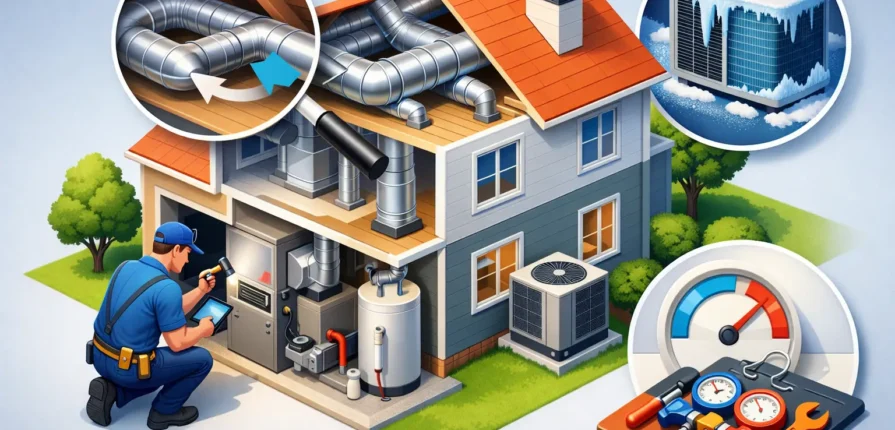
A furnace can run during a showing and still be near the end of its useful life. An air conditioner can blow cool air for 10 minutes while hiding a refrigerant leak, weak capacitor, or damaged compressor. That is why an HVAC inspection before buying a house deserves more attention than a quick test at the thermostat.
For buyers in central Ohio, the heating and cooling system is not a small detail. It affects comfort, utility bills, safety, and the real cost of the home after closing. A standard home inspection is valuable, but it is not always a full HVAC diagnostic. When the system is older, poorly documented, noisy, or showing any warning signs, bringing in an HVAC professional can prevent an expensive surprise.
Why a Home Inspection May Not Be Enough
A general home inspector looks at many parts of the property in a limited amount of time. They may operate the thermostat, check visible equipment, note the age of the furnace or AC unit, and look for obvious defects. That is useful, but it is different from a service-level HVAC inspection.
An HVAC technician has the tools and training to evaluate how the equipment is actually operating. That can include checking temperature rise, airflow, electrical components, refrigerant performance, combustion safety, venting, drainage, filter condition, and signs of wear inside the equipment. The goal is not to make a system look bad during a real estate transaction. The goal is to identify its condition honestly so you know what you are buying.
This matters most when a seller says the equipment is “working fine.” It may be working today, but a system with a failing blower motor or heat exchanger issue can still need significant work soon. A qualified inspection helps separate a routine maintenance item from a repair that should affect your offer or negotiations.
When to Schedule an HVAC Inspection Before Buying a House
The best time is during the inspection contingency period, before you are locked into the purchase. Do not wait until the final walk-through. By then, there may be little time to request repairs, seek a credit, or get a second opinion.
Schedule a separate HVAC inspection if the furnace, heat pump, or air conditioner is approaching or past its expected service life. Many systems last roughly 15 to 20 years with good maintenance, though actual life depends on installation quality, usage, and upkeep. A 17-year-old system is not automatically a deal-breaker. It does mean you should plan for replacement sooner rather than later and make sure it is operating safely.
A closer inspection also makes sense if the home inspection report mentions rust, unusual noises, poor airflow, dirty equipment, a missing service record, water around the unit, or a recommendation for further evaluation. Trust your own observations as well. Rooms that feel uneven, a thermostat that does not respond properly, loud startup noises, or a musty smell from vents all deserve a closer look.
Season matters. It can be harder to fully test cooling equipment during freezing weather or heating equipment during extreme heat because operating it under the wrong conditions can damage the unit. A technician can still inspect many components, but some performance testing may need to be scheduled when outdoor conditions allow. Ask what can be verified now and what remains uncertain.
What an HVAC Technician Should Check
A thorough HVAC inspection should go beyond turning the system on and off. The exact process depends on whether the home has a gas furnace, boiler, heat pump, central air conditioner, ductless system, or another setup.
Age, condition, and installation quality
The technician should identify the equipment type, manufacturer, model, serial number, and approximate age. They should also look at whether the system appears properly installed. Poor installation can shorten equipment life, reduce efficiency, create drainage problems, and make future repairs harder.
The indoor and outdoor units should be matched correctly. An oversized or undersized replacement unit can lead to humidity problems, short cycling, uneven temperatures, and unnecessary wear. A newer outdoor condenser does not always mean the entire cooling system was upgraded correctly.
Heating safety
With a gas furnace, safety is a major part of the inspection. The technician should check the burner operation, ignition system, venting, flue pipe condition, gas connections, and signs of carbon monoxide concerns. They should also inspect the heat exchanger for visible damage or conditions that raise concern.
A cracked heat exchanger can allow combustion gases to enter the air stream. Not every crack is visible without advanced testing or disassembly, and no honest contractor should promise certainty where it is not possible. Still, warning signs should be clearly explained, along with the recommended next step.
Air conditioning performance
For cooling equipment, the inspection may include checking the condenser, coil condition, refrigerant lines, electrical connections, contactor, capacitor, compressor operation, and condensate drain. A clogged drain can create water damage and mold concerns. A weak capacitor may be a manageable repair, while a failing compressor can change the numbers quickly.
The technician should also look for signs of refrigerant leakage. Low refrigerant is not a normal maintenance issue. If refrigerant is low, there is usually a leak that needs to be found and repaired, not simply topped off year after year.
Airflow, ductwork, and controls
Comfort problems are not always caused by the furnace or AC unit itself. Restricted filters, damaged ductwork, disconnected runs, undersized returns, and dirty coils can all reduce airflow. The inspection should include visible ductwork, supply and return airflow, blower operation, and thermostat response.
In older homes, ductwork may be poorly insulated, patched together, or leaking into an attic, crawl space, or basement. Repairing ducts is often less expensive than replacing a complete system, but it can still affect your budget and comfort plan.
Red Flags That Should Change the Conversation
No HVAC system is perfect, especially in an older home. The question is whether the issue is minor, manageable, or a safety and replacement concern. These signs usually call for a direct conversation with your agent and a qualified technician:
- A furnace or air conditioner that is 15 years old or older with no maintenance history
- Loud banging, grinding, squealing, repeated clicking, or frequent cycling
- Rust, corrosion, water stains, or standing water around equipment
- Burn marks, damaged wiring, tripped breakers, or electrical concerns
- A furnace with venting problems, combustion concerns, or a questionable heat exchanger
- Ice on refrigerant lines, weak cooling, or evidence of a refrigerant leak
- Major temperature differences between rooms or very weak airflow
- An HVAC system that cannot be safely or fully tested during the inspection period
A red flag does not always mean walk away from the house. It may mean asking the seller to repair the issue, requesting a credit, adjusting your offer, or setting aside replacement funds. What you do not want is to discover a major problem after closing, when the repair decision is entirely yours.
How to Use the Inspection Results
Ask for findings in plain language. You need to know what is working, what needs maintenance, what needs repair now, and what is likely to need replacement soon. A good report or service recommendation should distinguish between those categories.
If replacement is recommended, ask why. Is there a confirmed safety issue? Is the system inefficient but operating? Is a component repair possible, and would it be a sensible investment given the equipment age? The lowest immediate repair cost is not always the best value, but neither is replacing equipment that still has reliable life left.
Request estimates for the specific repair or replacement path when possible. That gives you a number to use in negotiations instead of a vague note that the system is “old.” Keep in mind that installation pricing can vary based on system size, ductwork condition, electrical updates, access, and efficiency level. A written evaluation gives you a much stronger starting point than an assumption.
Questions to Ask Before You Close
Ask the seller for maintenance records, warranty documents, and the date of the last professional service. Find out whether there have been prior breakdowns, water leaks, comfort complaints, or repairs to the furnace, AC, thermostat, or ductwork.
You should also ask whether the home has a working carbon monoxide detector, particularly if it uses gas appliances. Confirm the filter size and location, where shutoff switches are located, and whether any rooms have ongoing hot or cold spots. These are practical details that make move-in day easier and can reveal problems that do not show up during a short visit.
For buyers in Delaware, Sunbury, Lewis Center, Powell, and nearby communities, local weather adds another reason to be prepared. Ohio winters put real demand on a furnace, while humid summers expose cooling and drainage problems quickly. A system that barely gets by can become an urgent service call during the first major weather swing.
A home purchase already comes with enough unknowns. Before you sign the final papers, get a clear picture of the equipment responsible for your family’s heat, cooling, and indoor air. Professional Trade Service can provide an honest HVAC evaluation so you can move forward with facts, not crossed fingers.
Recent Comments