
A furnace replacement is not a purchase most homeowners plan for. It usually happens after a cold morning, a high repair bill, or a system that cannot keep up anymore. When comparing an electric furnace vs gas furnace, the better choice comes down to your home’s fuel access, upfront budget, long-term operating costs, and the kind of heat you want during an Ohio winter.
Both systems can heat a home reliably when they are correctly sized, installed, and maintained. But they work very differently, and choosing based on the lowest equipment price alone can create higher bills or comfort problems later.
Electric Furnace vs Gas Furnace: The Main Difference
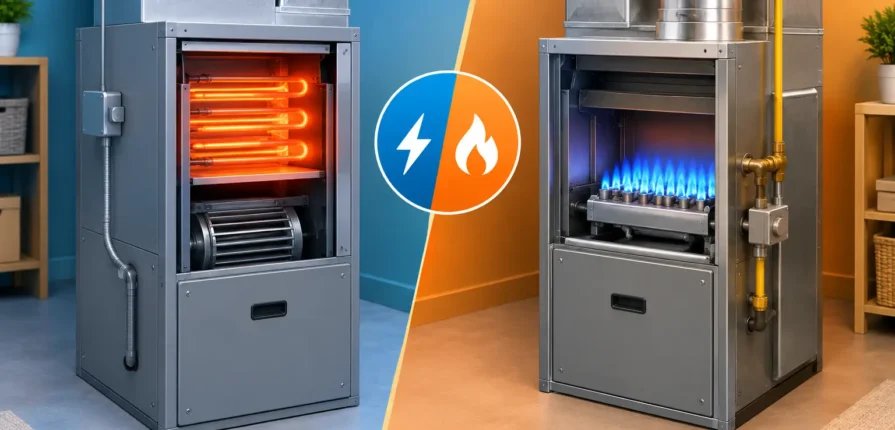
A gas furnace burns natural gas or propane to create heat. A heat exchanger transfers that heat to the air moving through your ductwork, and the furnace blower sends warm air throughout the home. Because combustion is involved, a gas furnace needs a properly installed venting system, gas line, and regular safety checks.
An electric furnace creates heat with electric resistance heating elements, similar to the way a toaster or electric oven produces heat. Air passes across the heated elements and then travels through the ducts. There is no combustion, no gas connection, and no flue pipe.
That difference affects nearly every part of the decision: installation requirements, monthly utility costs, maintenance needs, safety considerations, and performance in cold weather.
Upfront Installation Cost
Electric furnaces often cost less to purchase and install than gas furnaces. The equipment is generally simpler, and there is no need to run a gas line or install combustion venting. For a smaller home, a mild-climate property, or a location without natural gas access, that lower initial cost can be appealing.
A gas furnace usually has a higher installation cost because the work may involve gas piping, venting, drainage for high-efficiency models, and combustion setup. If your home already has a properly sized gas line and an existing gas furnace, replacing it with another gas model is usually more straightforward than converting to electric heat.
The installation quote should cover more than the furnace cabinet. Proper sizing, duct condition, electrical capacity, thermostat compatibility, air filtration, and venting all matter. A low quote that skips those details is rarely a bargain.
Electrical upgrades can change the math
An electric furnace draws a significant amount of power. Older homes may need an electrical panel upgrade, new breakers, or heavier wiring before the system can be installed safely. Those costs can narrow or erase the initial price advantage of electric heat.
Since Professional Trade Service handles HVAC and electrical work, homeowners can get a clearer picture of what the conversion would actually require rather than guessing from an equipment price alone.
Monthly Heating Costs in Central Ohio
For most central Ohio homeowners with access to natural gas, a high-efficiency gas furnace is usually less expensive to operate than an electric resistance furnace. Natural gas has historically provided a lower cost per unit of usable heat than electricity in this area.
Electric furnaces are highly efficient at the equipment level. Nearly all the electricity they use becomes heat inside the home. That sounds like an easy win, but efficiency percentage is only part of the story. Electricity generally costs more per unit of heat, so an electric furnace can still result in higher winter utility bills.
A modern gas furnace may be rated at 92% to 98% AFUE, meaning it converts most of its fuel into usable heat. Some energy is lost through venting, but the lower fuel cost often makes gas the more economical choice for a full Ohio heating season.
Your actual result depends on utility rates, insulation, thermostat settings, square footage, duct leakage, and how much heat your home loses on a windy January night. A home with poor attic insulation can waste energy regardless of which furnace you install.
Comfort and Cold-Weather Performance
Gas furnaces typically deliver hotter supply air than electric furnaces. That can make a noticeable difference when outdoor temperatures drop well below freezing. The air coming from the registers may feel warmer, and the system can recover faster after you turn up the thermostat.
Electric furnaces provide steady, reliable heat, but the air may not feel as hot at the vent. That does not mean the system is failing. It simply produces heat differently. In a properly sized home with good insulation and ductwork, an electric furnace can maintain a comfortable temperature.
For many Ohio households, gas heat feels more responsive during severe cold. Families in drafty older homes or homes with larger heating loads often prefer it for that reason.
Safety: Both Need Professional Attention
Electric furnaces do not burn fuel, so they do not create carbon monoxide through normal operation. That removes one combustion-related concern. However, electric heating equipment still requires safe wiring, correct breaker sizing, clean components, and regular inspections to prevent overheating or electrical failures.
Gas furnaces are safe when installed and maintained correctly, but they require more safety attention. A cracked heat exchanger, venting issue, gas leak, or incomplete combustion can become serious. Every home with fuel-burning equipment should have working carbon monoxide alarms near sleeping areas.
Annual service is not just about avoiding a breakdown. During a gas furnace tune-up, a technician checks the heat exchanger, burners, ignition system, gas pressure, venting, safety controls, and carbon monoxide readings. Those checks help catch problems before they turn into a no-heat emergency or a safety concern.
Maintenance and Expected Lifespan
Electric furnaces have fewer mechanical and combustion-related components, which can mean fewer maintenance issues over time. There are no burners to clean, no gas valves, and no heat exchanger exposed to combustion. Many electric furnaces can last 20 to 30 years with proper care.
Gas furnaces usually last about 15 to 20 years, though some last longer with consistent maintenance. Their parts are more complex, and Ohio winters put real demand on heating equipment. Igniters, flame sensors, blower motors, pressure switches, and heat exchangers can all require attention as the system ages.
Neither type is maintenance-free. Both need clean filters, clear return vents, properly functioning thermostats, and periodic professional inspections. A neglected furnace loses efficiency, works harder, and is more likely to quit when you need it most.
When an Electric Furnace Makes Sense
An electric furnace may be the right choice if natural gas is not available, propane costs are high, or you want to avoid combustion equipment altogether. It can also make sense in a small, well-insulated home with a modest heating load.
It is worth considering when you already have adequate electrical service and do not expect extremely high winter heating demand. For some property owners, the lower upfront cost and simpler equipment are more important than the potential for higher utility bills.
Electric resistance heat should not be confused with a heat pump. A heat pump uses electricity too, but it moves heat rather than creating it with heating elements. In many cases, a heat pump paired with electric backup heat can be a more efficient all-electric option than an electric furnace. The right answer depends on the home and the system design.
When a Gas Furnace Makes Sense
A gas furnace is often the practical choice for homes in Delaware County and nearby central Ohio communities that already have natural gas service. It is especially appealing for larger homes, older homes with higher heat loss, and households that want strong heating performance during prolonged cold weather.
It also makes sense when you want to keep winter operating costs under control. A high-efficiency gas furnace can provide dependable comfort for years, provided the system is correctly sized and the installation is done right.
If your current gas furnace is failing, do not assume a straight replacement is your only option. A technician should inspect the ductwork, airflow, thermostat, venting, and overall heating load before recommending equipment. A new furnace cannot solve comfort problems caused by undersized ducts or poor insulation.
Get the Recommendation That Fits Your Home
The best furnace is not automatically electric or gas. It is the system that fits your home’s layout, fuel options, budget, electrical capacity, and heating needs without creating surprises after installation. A professional in-home assessment can show you the real costs, not just the advertised equipment price.
Before the next cold snap turns an aging furnace into an emergency, have it inspected and ask for clear options. A dependable heating system starts with an honest diagnosis and a plan that makes sense for your home.
Recent Comments