
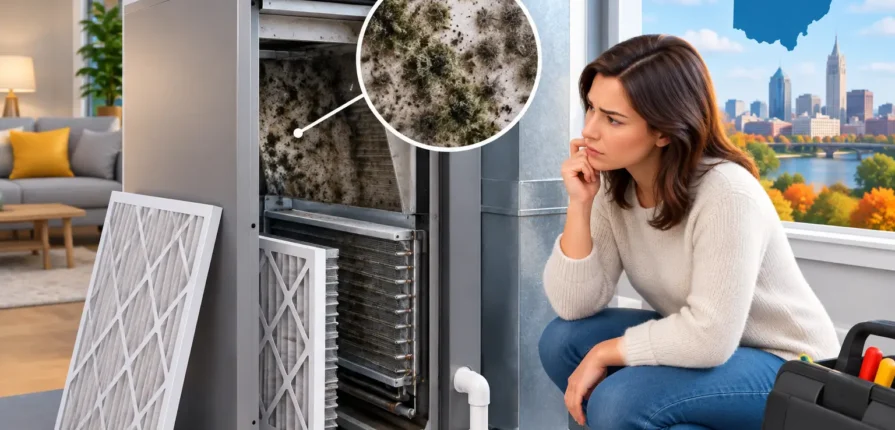
A musty smell when the furnace or air conditioner starts is more than an annoyance. If you are asking, is HVAC mold dangerous, the honest answer is that it can be – especially when a moisture problem lets mold grow inside equipment that moves air through your home.
Not every dark spot, dusty vent, or stale odor means you have a serious mold problem. But visible growth, recurring odors, unexplained moisture, and worsening allergy-like symptoms deserve a closer look. The goal is not to panic. It is to find the water source, determine what is actually growing, and correct the problem before it spreads through the system or damages your home.
Is HVAC mold dangerous for your family?
Mold affects people differently. Some people may notice nothing at all, while others experience irritated eyes, a stuffy nose, coughing, throat irritation, headaches, or worsening asthma and allergies. Children, older adults, people with respiratory conditions, and anyone with a weakened immune system can be more sensitive to poor indoor air quality.
The concern with HVAC mold is not simply that it exists. The problem is air movement. A heating and cooling system can pick up spores and particles near a contaminated component and circulate them into occupied rooms. That exposure can be more frequent when the system runs for long stretches during a hot, humid Ohio summer or a cold winter.
There is no reliable way to identify a mold species by color alone. Black material is not automatically the mold people often fear, and white or green material is not automatically harmless. A qualified inspection focuses on the location, amount of growth, moisture source, system condition, and the people using the building. That is far more useful than guessing based on appearance.
Why mold grows in heating and cooling systems
Mold needs moisture, a surface where it can settle, and a food source such as dust or organic debris. HVAC equipment can provide all three when maintenance or drainage issues are left unresolved.
Air conditioners naturally create condensation as they remove humidity from the air. Normally, that water drains through the condensate line and out of the home. If the drain line clogs, the drain pan cracks, the evaporator coil gets dirty, or the system is not draining correctly, moisture can collect inside the air handler or near the coil. Dust on the coil, insulation, or blower components then gives mold something to grow on.
High indoor humidity is another common factor. If your home regularly stays above about 50% relative humidity, mold has a better chance of taking hold. An oversized air conditioner may cool the house too quickly without removing enough humidity. Leaky ductwork, poor attic insulation, unvented bathrooms, plumbing leaks, and damp crawl spaces can also introduce moisture that affects nearby HVAC components.
In heating systems, mold may develop when moisture enters ductwork through leaks, condensation forms on poorly insulated ducts, or a humidifier is not cleaned and adjusted properly. A furnace itself does not create the same condensation pattern as an air conditioner, but the whole system shares airflow paths. One moisture issue can affect more than one part of the equipment.
Signs you should schedule an HVAC inspection
A moldy smell that appears when the system turns on is one of the clearest warning signs. It may fade after a few minutes, but that does not mean the source is gone. It can point to moisture and buildup near the evaporator coil, drain pan, blower compartment, or ductwork.
Visible spotting around supply vents, inside an accessible air handler compartment, or on duct insulation also calls for professional attention. So does water around the indoor unit, frequent drain line backups, ice on refrigerant lines, or a system that leaves the house cool but clammy.
Pay attention to patterns. If one room smells damp, has repeated condensation, or triggers symptoms that improve when you leave the room, there may be a local duct, insulation, or moisture issue. For commercial property managers, complaints from occupants in one area of the building can provide the same useful clue.
Dust by itself is common and does not prove mold. Neither does a one-time odor after a long shutdown period. But repeated odors or visible growth should not be solved by spraying fragrance into a vent or replacing a filter and hoping for the best.
What a professional should check
A proper HVAC mold evaluation starts with the cause, not just the surface. Cleaning a contaminated area without fixing the moisture problem is a short-term fix at best.
A technician should inspect the evaporator coil, condensate pan and drain line, blower assembly, filter rack, cabinet insulation, accessible ducts, and areas around the air handler for water damage. They should also check whether the system is draining, filtering, and dehumidifying as it should.
If growth is limited to a small, nonporous surface inside the equipment, cleaning may be appropriate after the moisture issue is repaired. If mold has reached porous insulation, contaminated flex duct liner, wall materials, or a large area of the home, removal and replacement may be safer than surface cleaning. In those cases, a dedicated mold remediation professional may need to handle the affected building materials while the HVAC contractor addresses the mechanical cause.
Testing is not always necessary. When visible mold and a clear moisture source are present, the repair path is often straightforward. Testing can be helpful when the source is unclear, occupants have significant health concerns, or a property manager needs documented information for a larger issue. The right choice depends on the situation, not a one-size-fits-all upsell.
What not to do when you suspect HVAC mold
Do not run the system continuously if turning it on produces a strong musty smell or you can see significant growth near the air handler. You may be spreading particles while the underlying moisture issue gets worse. If temperatures are extreme, call for service promptly so a technician can advise on the safest next step.
Avoid pouring harsh chemicals into equipment, spraying bleach through vents, or applying store-bought foggers inside your duct system. These products can damage components, leave residue, create fumes, and fail to reach the actual source. Bleach is also not a dependable solution for porous materials such as duct insulation.
Changing the filter is worthwhile, but it is not mold remediation. Use the filter size and rating recommended for your system. A filter that is too restrictive can reduce airflow, strain equipment, and contribute to coil problems. The best filter is one your system can handle and that gets changed on schedule.
How to prevent mold from coming back
Prevention comes down to moisture control and regular equipment care. Keep the condensate drain line clear, have the coil and blower checked during seasonal maintenance, and address water around the indoor unit right away. A clean system drains and dehumidifies more effectively than one covered in dust and buildup.
Run bathroom and kitchen exhaust fans when moisture is being produced, repair plumbing leaks quickly, and consider a dehumidifier if parts of the home remain damp. During cooling season, your air conditioner should lower humidity as well as temperature. If the home feels sticky even when the thermostat is satisfied, it is worth having the system evaluated.
Ductwork matters too. Damaged or poorly insulated ducts in attics, basements, crawl spaces, and unconditioned areas can sweat or pull in damp, dusty air. Sealing, insulating, or repairing those sections may protect both indoor air quality and energy efficiency.
For homeowners in Delaware and nearby central Ohio communities, seasonal service is a practical way to catch drain, coil, airflow, and humidity issues early. Professional Trade Service can inspect the system, identify the source of moisture, and explain what needs to be repaired without turning a concern into a guessing game.
A musty HVAC smell is your home telling you that something needs attention. Address it early, keep moisture under control, and you can protect your comfort, your equipment, and the people who rely on both.
Recent Comments