
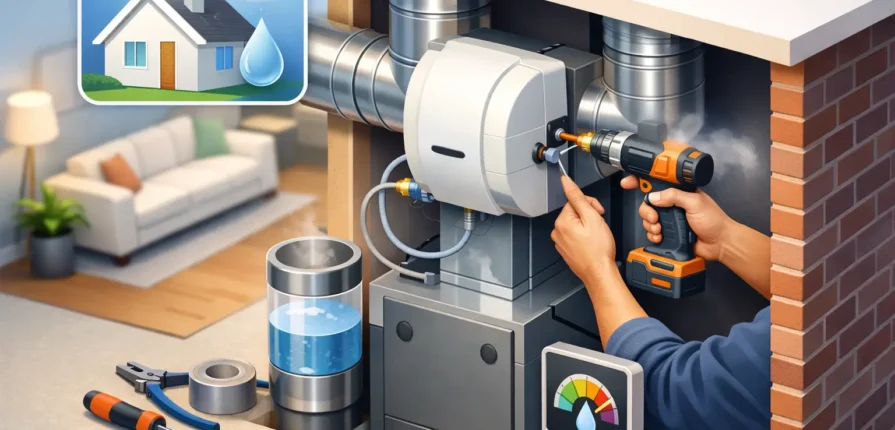
Dry winter air in central Ohio is more than a comfort issue. It can leave your family with scratchy throats, dry skin, frequent static shocks, and hardwood floors that shrink or crack. A properly planned whole house humidifier installation can help by adding moisture through your home’s ductwork, giving every heated room a more consistent level of comfort.
Unlike a portable unit that needs frequent refilling and only serves one room, a whole-house system works with your furnace or air handler. It is a practical upgrade, but it is not a one-size-fits-all purchase. The right equipment, controls, and installation details matter if you want the benefits without creating moisture problems.
What a Whole-House Humidifier Actually Does
A whole-house humidifier is mounted on or near your HVAC ductwork. When your heating system runs, the humidifier introduces a controlled amount of water vapor into the air stream. That moisture travels through the supply ducts and is distributed throughout the home.
Most homes benefit from indoor humidity between 30% and 50%. During an Ohio winter, outdoor air holds very little moisture. Once that air is heated indoors, relative humidity can drop quickly. A humidifier helps bring it back to a reasonable range.
The goal is balance, not making the house feel damp. Too little humidity can aggravate dry-air discomfort. Too much can cause window condensation, encourage mold growth, and damage building materials. A good installation includes a humidistat or smart control that adjusts output based on indoor conditions and, in some cases, outdoor temperature.
Whole House Humidifier Installation Starts With the Right Fit
The first step is not choosing the biggest humidifier on the shelf. It is evaluating your home and heating system. A technician should look at square footage, ceiling height, insulation, window quality, duct layout, furnace run time, and how tightly the home is sealed.
A newer, tightly built home may need a different output level than an older home with drafty windows and doors. A home with several levels or a finished basement may also have different humidity needs from floor to floor. If the unit is undersized, it may run often without keeping up. If it is oversized or set incorrectly, it can add more moisture than the home can handle.
There are three common types of whole-house humidifiers. Bypass units use the furnace blower and a bypass duct to move air through a water panel. They are often a solid, cost-conscious choice when ductwork and furnace capacity allow. Fan-powered units have their own internal fan, which can provide more moisture output without a bypass duct.
Steam humidifiers boil water and inject steam directly into the duct system. They usually deliver the strongest performance and can work even when the furnace is not running, depending on the setup. They also cost more upfront and require proper electrical capacity, water connections, and regular maintenance. The best choice depends on your home, your comfort goals, and your budget.
Water, Drain, and Electrical Requirements
A whole-house humidifier needs more than a place on the duct. It needs a reliable water supply, a safe drain path, and the right electrical connection for the equipment being installed.
Many bypass and fan-powered models connect to a nearby cold-water line. Steam models typically have more demanding electrical requirements and may need a dedicated circuit. Drainage is equally important because excess water must leave the system without leaking into mechanical areas or causing damage around the furnace.
This is one reason professional installation pays off. Cutting into ductwork, tapping a water line, installing a drain, and wiring controls are jobs that need to work together. Professional Trade Service can handle HVAC work along with the related plumbing and electrical needs, so homeowners do not have to coordinate several contractors for one comfort upgrade.
Placement Matters More Than It Looks
Humidifier placement affects performance, service access, and safety. The unit is generally installed on the supply or return duct near the furnace, based on the manufacturer’s requirements and the type of system. A technician also needs enough room to replace the water panel, inspect components, and service the unit later.
Poor placement can create airflow restrictions, make maintenance difficult, or allow water to collect where it should not. The installer should verify that ductwork is in good condition and that the furnace blower can support the added equipment. If your duct system already has airflow problems, solving those first may be the smarter investment.
What Happens During a Professional Installation
For a typical home, installation often takes a few hours. The exact time depends on the humidifier type, access to plumbing and drainage, duct modifications, and electrical work. Steam installations can take longer than standard bypass installations.
The job should begin with an assessment and a clear explanation of what the home needs. Once the equipment is selected, the technician mounts it securely, makes the duct connections, runs the water and drain lines, installs the humidistat, and connects the controls to the HVAC system as required.
Before leaving, the technician should test operation, check for leaks, confirm that the humidistat responds correctly, and explain how to use the controls. Ask where the water panel or canister is located and how often it should be changed. You should also know which setting to use when outdoor temperatures fall below freezing.
A quality install is not just about getting water into the air. It is about making sure moisture is introduced safely, controlled accurately, and delivered without interfering with your heating equipment.
Setting Humidity Levels During Ohio Winters
Many homeowners assume they should keep the humidistat at the highest setting for the most comfort. That is not how it works. As outdoor temperatures drop, windows and exterior walls become colder. High indoor humidity can condense on those cold surfaces.
If you see moisture on window glass, damp window frames, peeling paint, or frost around windows, lower the humidistat setting. This does not always mean the humidifier is defective. It may simply mean the house cannot safely hold that amount of moisture during a cold snap.
A good starting point is often around 30% to 35% in winter, then adjusting based on comfort and condensation. Homes with older windows may need a lower setting. Modern, well-insulated homes may tolerate more. The right number is the highest comfortable humidity level that does not create condensation.
Smart humidistats can make this easier by automatically reducing humidity as outdoor temperatures fall. They are a worthwhile option for homeowners who want less guesswork, especially during the sharp temperature swings common in this area.
Maintenance Keeps the System Clean and Effective
Whole-house humidifiers are not install-and-forget equipment. Water minerals can build up on pads, trays, valves, and steam canisters. Without routine service, output can drop and components can wear out early.
Most bypass and fan-powered units need a new water panel at least once per heating season. Homes with hard water may need more frequent attention. Steam humidifiers use replaceable canisters that should be checked according to the manufacturer’s schedule. The water supply, drain line, solenoid valve, and humidistat should also be inspected during seasonal HVAC maintenance.
When spring arrives and heating season ends, the humidifier should be shut down properly. That usually means turning off the water supply, setting the humidistat to the off position, and cleaning the equipment as recommended. Leaving it running when it is not needed can waste water and increase wear.
When to Call an HVAC Professional
Call for service if your humidifier leaks, produces little or no humidity, makes unusual noises, trips a breaker, or leaves water around the furnace. You should also schedule an inspection if your home still feels extremely dry even though the unit is running. The problem may be the humidifier, but it could also involve duct leaks, poor airflow, thermostat settings, or an incorrectly sized system.
A whole-house humidifier is a straightforward way to improve winter comfort, protect wood furnishings, and reduce some of the irritation caused by dry indoor air. The difference comes from getting the installation and settings right. If your home is dealing with dry air this heating season, a qualified HVAC technician can help you choose a system that fits the house, not just the sales brochure.
Recent Comments