
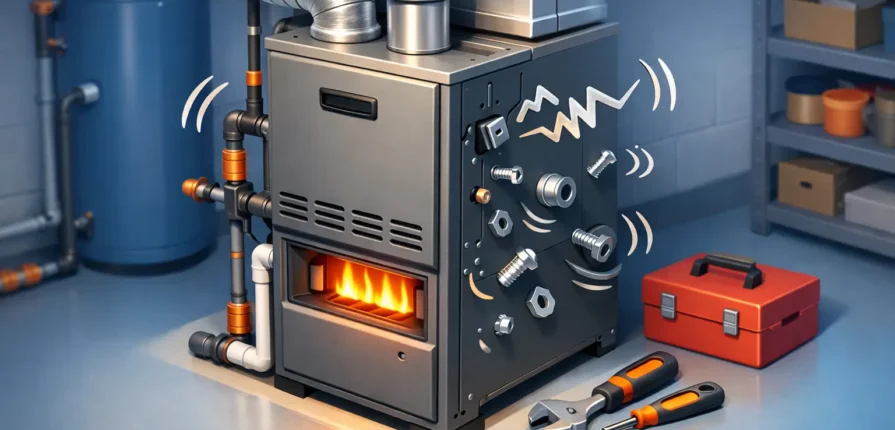
A furnace rarely starts rattling for no reason. The sound may be as simple as a loose panel vibrating during a heating cycle, or it may point to a blower, burner, or venting problem that needs attention. If you are searching “why is furnace making rattling noises,” the safest answer is this: identify when and where the noise happens, then do not ignore a sound that gets louder, repeats every cycle, or comes with performance problems.
A little cabinet vibration is usually not an emergency. A persistent metal-on-metal rattle, a noise near the burners, or rattling paired with gas odors, weak heat, or repeated shutdowns calls for professional furnace service. Catching the issue early can prevent a cold-house breakdown when central Ohio temperatures drop.
Why Is Your Furnace Making Rattling Noises?
Your furnace has a blower motor, wheel, burner assembly, access panels, duct connections, electrical components, and safety switches. As those parts heat up, cool down, and run for years, screws can loosen, metal can expand, and moving parts can wear. The timing of the rattle often gives the best clue.
A rattle that starts the instant the blower turns on may involve the blower compartment, filter, or ductwork. A noise that occurs only during ignition can involve the burner area or a loose component near the combustion system. If the sound continues after the furnace stops, expanding or contracting metal may be the cause.
The source matters more than the volume. A quiet rattle inside a loose return-air grille may be harmless. A louder rattling sound from inside the furnace cabinet is worth checking before it develops into a larger repair.
Loose Access Panels, Screws, or Cabinet Parts
This is one of the most common and least serious causes. Furnace panels are removed during maintenance, filter changes, and repairs. If an access door is not seated correctly or a fastener is loose, the cabinet can vibrate when the blower starts.
With the thermostat turned off, you can check that the exterior panels are fully closed and secure. Do not remove panels or reach into the furnace while it is operating. If a panel is bent, will not stay in place, or the rattle remains after it is secured, a technician should inspect the cabinet and internal mounting points.
A Loose or Dirty Furnace Filter
An incorrectly sized filter can shift in its slot and make a fluttering or rattling sound as air moves through the return. A clogged filter can also increase airflow strain, which may make existing vibrations more noticeable.
Check the filter’s size and airflow arrow before replacing it. The filter should fit snugly without being forced. If you recently installed a very restrictive filter and the furnace became louder afterward, ask an HVAC professional whether that filter is appropriate for your system. More filtration is not always better if it restricts the airflow your furnace needs.
Blower Wheel or Motor Problems
The blower wheel is the fan that moves heated air through the ductwork. If it becomes loose, dirty, damaged, or unbalanced, it can rattle or vibrate when the furnace runs. A worn blower motor mount or failing motor bearing can create similar sounds.
These problems tend to become more obvious as the blower reaches full speed. You may also notice weaker airflow from vents, a humming sound, or vibration in the furnace cabinet. Blower repairs should be handled by a trained technician. The components are inside the unit, and a wrong adjustment can create an electrical, airflow, or safety issue.
Loose Ductwork or Return-Air Grilles
Not every furnace rattle starts in the furnace. Sheet-metal ducts can expand and contract as warm air moves through them. A loose duct joint, register cover, or return-air grille can vibrate loudly enough to sound like a furnace problem.
Walk through the home while the heat is running. Listen near major return grilles, basement duct runs, and registers closest to the furnace. If the sound changes when you gently hold a grille in place, you may have found the source. A loose grille can often be tightened, but ductwork that is sagging, separating, or making repeated banging sounds should be evaluated.
Burner, Ignition, or Combustion Concerns
Rattling near the burner compartment is not a do-it-yourself repair. Furnaces burn fuel and rely on correct ignition, venting, and airflow to operate safely. A loose burner component, damaged heat shield, vent pipe issue, or problem in the combustion assembly can produce unusual noise.
Pay close attention if the rattle happens just before ignition, at startup, or alongside delayed ignition, popping, rumbling, or an odor of gas. Turn the furnace off, leave the area if you smell gas, and follow your gas utility’s safety instructions. Do not attempt to tighten or clean gas-related parts yourself.
A Failing Inducer Motor
Many gas furnaces use an inducer motor to move combustion gases through the vent before the burners ignite. When its motor, wheel, or mounting hardware wears out, it may rattle, buzz, or squeal at the beginning of a heating cycle.
Because the inducer is part of the furnace’s venting and safety sequence, it needs a prompt inspection. A furnace may eventually refuse to ignite if the control board does not confirm proper venting.
What You Can Check Safely Before Calling
Homeowners can rule out a few simple issues without opening the equipment or working around electrical and gas components. Start by noting whether the noise occurs at startup, during heating, when the blower runs, or after shutdown. That detail helps a technician narrow down the problem quickly.
Next, make sure furniture, storage boxes, or other items are not leaning against nearby ductwork or the furnace cabinet. Confirm the filter is properly installed and that exterior access panels are closed. You can also listen at registers and return grilles to determine whether the sound is traveling through the ducts.
Do not keep restarting the furnace to “see if it goes away.” Repeated cycling can add stress when a motor or moving part is already failing. Avoid removing electrical panels, disconnecting safety switches, or reaching near the blower or burners.
When a Rattling Furnace Needs Immediate Service
A rattling noise becomes more urgent when it is paired with any sign that the furnace is not operating normally. Shut the system down and arrange service if you notice a burning smell, gas odor, smoke, carbon monoxide alarm, water leaking around the unit, weak heat, or frequent on-and-off cycling.
You should also call promptly if the furnace is making a loud metal rattle, scraping sound, or repeated rumble. Those sounds can point to a loose moving part that may cause more damage if the equipment continues to run. For homes with older equipment, a repair visit can also reveal whether a targeted fix makes financial sense or whether replacement planning is more practical.
For property managers, a noisy furnace deserves quick attention even if the building still has heat. A small vibration issue can turn into a no-heat call, tenant disruption, or equipment damage at the worst time of year.
Can Furnace Maintenance Prevent Rattling?
Regular maintenance cannot stop every part from wearing out, but it catches many rattles before they become disruptive. During a professional tune-up, a technician can inspect mounting hardware, blower components, burner operation, filters, electrical connections, venting, and overall system performance.
Maintenance also helps separate normal operating sounds from warning signs. Metal ductwork may make occasional ticking noises as it warms and cools. That is different from a new, persistent rattle coming from the furnace itself. Knowing the difference helps you avoid both unnecessary worry and costly delays.
Professional Trade Service helps homeowners and property managers in the Delaware area diagnose furnace noises with straightforward recommendations and experienced repair service. The goal is not to sell a repair you do not need. It is to find the source, explain the condition of the equipment, and get dependable heat back on as quickly as possible.
A furnace should provide warmth, not a new noise you have to listen for every time the heat turns on. If the rattling is new, getting worse, or accompanied by any performance or safety concern, schedule an inspection before the next cold night makes the decision for you.
Recent Comments