
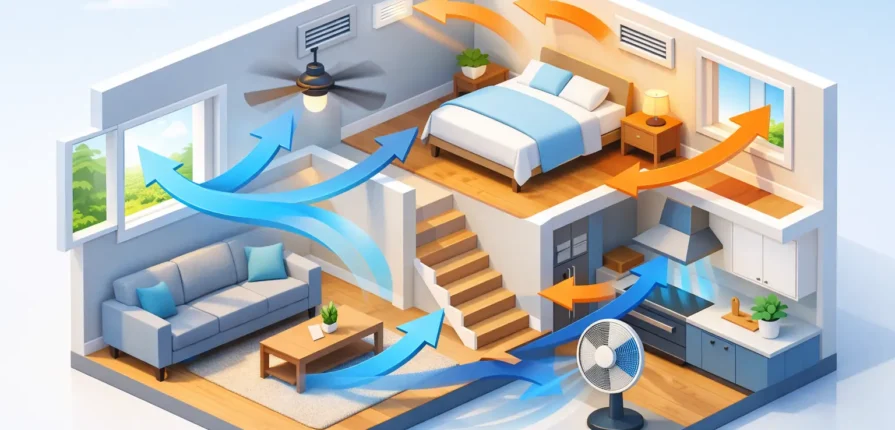
A room that is always stuffy, a bedroom that never matches the thermostat setting, or a downstairs area that feels damp can all point to the same problem: poor air movement. Knowing how to improve indoor airflow starts with looking beyond the thermostat. Your HVAC system may be running, but if conditioned air cannot move freely through the home and return to the system, comfort will stay uneven.
For homeowners and property managers, airflow is not just a comfort issue. Restricted airflow can make heating and cooling equipment work harder, raise utility costs, worsen indoor humidity, and shorten the life of expensive components. Some fixes are simple. Others need a trained technician who can find a duct, blower, or equipment problem before it turns into a breakdown.
How to Improve Indoor Airflow Without Guesswork
Start with the easy checks before assuming the furnace or air conditioner has failed. Many airflow complaints come down to something blocking the system, not a major mechanical issue.
Replace a dirty air filter
A clogged filter is one of the most common causes of weak airflow. As it fills with dust, pet hair, and debris, the blower has to push air through a tighter restriction. You may notice rooms taking longer to heat or cool, more dust around the home, or a system that seems to run nonstop.
Check the filter monthly, especially during heavy summer or winter use. Most standard filters should be replaced every one to three months, but the right schedule depends on the filter type, pets, household size, and indoor air quality. A high-efficiency filter can capture more particles, but the wrong filter for your equipment can also restrict airflow. If you are unsure what rating your system can handle, ask an HVAC technician rather than choosing the densest filter on the shelf.
Open and clear supply and return vents
Supply vents deliver heated or cooled air into rooms. Return vents pull air back to the HVAC system so it can be conditioned again. Both need room to work.
Walk through the home and make sure furniture, curtains, rugs, storage bins, and other items are not covering registers. Open supply vents fully unless a technician has specifically recommended a different setting. Closing vents in unused rooms may sound like a way to save money, but it can increase pressure in the duct system and reduce overall performance.
Returns matter just as much. A large return grille may be located in a hallway, living room, or central area of the home. Keep it clear by several inches or more. If it is blocked by a couch or bookcase, the system cannot pull air back efficiently.
Keep interior doors from trapping air
Closed bedroom and office doors can create pressure problems, especially in homes with only one central return. Air enters the room through a supply vent but has limited space to leave. That can make the room feel too warm in summer or too cool in winter, even when the rest of the house is comfortable.
Try leaving doors open for a day and see whether comfort improves. If you need doors closed for privacy, a contractor can evaluate solutions such as transfer grilles, return ducts, or properly sized door undercuts. The right option depends on the home layout and the HVAC design.
Use Fans to Support, Not Replace, HVAC Airflow
Ceiling fans and portable fans can make a noticeable difference, but they do not lower the temperature of a room. They move air across your skin, which helps you feel cooler and reduces stagnant pockets of air.
In summer, ceiling fans should generally run counterclockwise at a higher speed to push air downward. In winter, a low clockwise setting can gently circulate warm air that collects near the ceiling. Turn fans off when a room is empty. They improve comfort for people, not for furniture.
A box fan placed near an open window can also help exchange stale indoor air for outdoor air during mild weather. Be selective, though. On hot, humid central Ohio days, bringing in outdoor air can make the home feel wetter and force the air conditioner to work harder. Keep windows closed when outdoor humidity, smoke, pollen, or extreme temperatures are high.
Check the Parts of the System You Cannot See
If filters and vents are clear but airflow is still weak, the problem may be inside the equipment or ductwork. This is where a professional inspection can save time and prevent unnecessary repairs.
Look for duct issues
Ducts can leak, disconnect, sag, become crushed, or lose insulation over time. Air may be leaving the system before it reaches the rooms that need it. Leaks in attics, crawl spaces, garages, or unfinished basements are especially wasteful because conditioned air is being delivered to areas that are not meant to be heated or cooled.
Uneven airflow can also come from ducts that were undersized, poorly routed, or added during a remodeling project without a full system evaluation. Closing vents will not correct those design problems. A technician may need to measure airflow, inspect accessible ducts, and determine whether sealing, repair, balancing, or redesign is the right fix.
Have the blower and coils inspected
Your HVAC blower is responsible for moving air through the home. A worn blower motor, failing capacitor, dirty blower wheel, incorrect speed setting, or control issue can reduce airflow. On air conditioning systems, a dirty indoor evaporator coil can also restrict air movement and cause the coil to freeze.
Do not ignore signs such as whistling vents, a burning smell, ice on refrigerant lines, water around the indoor unit, or a sudden drop in airflow. Turn the system off if you see ice or smell burning, then schedule service. Continuing to run a struggling system can cause more damage.
Make sure the system is the right size
A system that is too small may run constantly and still struggle in extreme weather. A system that is too large can short-cycle, which means it turns on and off too quickly to circulate and dehumidify air properly. Both situations create comfort complaints, but the solution is not always replacement.
A qualified technician should assess insulation, window exposure, duct condition, room additions, occupancy, and equipment performance before recommending major work. For a home with one persistently uncomfortable room, a zoning solution, duct modification, or mini-split may be more practical than replacing the entire system.
Manage Humidity and Fresh Air Carefully
Airflow and humidity are closely connected. High indoor humidity makes a home feel warmer, encourages musty odors, and can contribute to condensation around windows. Low humidity in winter can leave occupants with dry skin, irritated sinuses, and static electricity.
Your air conditioner removes moisture as it cools, provided it is operating correctly and running long enough. If humidity stays high even when the thermostat is satisfied, the issue could be oversized equipment, a drainage problem, poor duct sealing, or too much humid outdoor air entering the house. A properly sized whole-home dehumidifier may help in some homes, particularly basements and tightly built properties.
Fresh air is also valuable, but it needs control. Exhaust fans in bathrooms and kitchens should vent outdoors and should be used during showers and cooking. They remove moisture, odors, and combustion byproducts. However, running powerful exhaust equipment for long periods can pull unconditioned outside air into a leaky home. Balance matters.
When to Call an HVAC Professional
Basic maintenance goes a long way, but some airflow problems need more than a new filter. Schedule an inspection if one or more rooms remain uncomfortable, airflow has dropped noticeably, utility bills are climbing, the system is noisy, or the equipment frequently cycles on and off.
For rental homes and commercial spaces, uneven airflow can also lead to tenant complaints, moisture damage, and unnecessary wear on equipment. A documented seasonal tune-up gives you a clearer picture of filter condition, blower performance, duct concerns, refrigerant operation, and safety controls before peak weather arrives.
Professional Trade Service helps homeowners and property managers identify the actual source of airflow trouble, whether it is a simple maintenance need or a larger HVAC repair. Getting a straight answer early is usually less expensive than waiting for a no-cool or no-heat call.
A comfortable home should not depend on turning the thermostat lower, closing off rooms, or hoping the next season will be easier. Keep filters and vents clear, pay attention to changes in room comfort, and have persistent airflow problems checked before your system has to work its hardest.
Recent Comments