
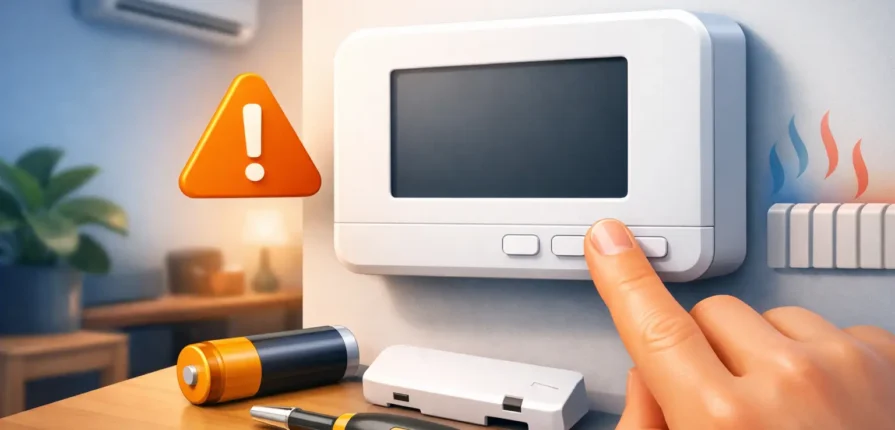
A blank thermostat can turn a normal Ohio morning into a problem fast, especially when the furnace or air conditioner will not respond. If you are asking, why is my thermostat blank, the answer is usually related to lost power – but the source of that power loss is not always obvious. It may be as simple as dead batteries, or it may point to a tripped breaker, a clogged condensate drain, or an HVAC repair that needs attention.
Before assuming the thermostat itself has failed, take a few safe checks. A blank screen does not automatically mean you need a new thermostat, and guessing can lead to unnecessary expense.
Why Is My Thermostat Blank? Start With Power
Most digital thermostats need power from one of two places: batteries or the HVAC system’s low-voltage wiring. When either source is interrupted, the display can go dark.
If your thermostat uses batteries, replace them first. Even if you changed them recently, a weak battery, corroded contact, or battery installed backward can leave the screen blank. Use fresh batteries, make sure the contacts are clean, and snap the thermostat face securely back onto its wall plate.
For a thermostat powered by your heating and cooling equipment, check whether the furnace, air handler, or boiler has power. A service switch near the equipment may have been turned off by accident. This switch often looks like a regular wall light switch, but it controls your HVAC system. Make sure it is in the ON position.
Next, check your electrical panel for a tripped HVAC breaker. A breaker may look only slightly out of place, so turn the affected breaker completely OFF before turning it back ON once. If it trips again, stop there. A recurring trip can signal an electrical short, a failing component, or a problem inside the equipment that needs professional diagnosis.
A Furnace Door Can Cause a Blank Thermostat
Many furnaces have a safety switch behind the front access panel. If that panel is loose, misaligned, or not fully installed after a filter change, the safety switch prevents the furnace from operating. In some systems, that interruption also cuts power to the thermostat.
Remove and reinstall the furnace panel carefully, making sure it sits flush and engages the switch. Do not tape, hold down, or bypass a furnace door switch. That safety device is there to protect you from moving parts and electrical hazards.
This is a common issue during heating season, particularly after a homeowner changes a filter and the panel does not seat correctly. It is an easy fix when that is truly the cause. If the screen remains blank after the panel is secured, move on to the next check.
A Clogged Drain May Shut Down Your Air Conditioner
During cooling season, an air conditioner or high-efficiency furnace creates condensation. That water needs to drain properly. If the condensate line clogs, a float switch may shut down the system to prevent water damage. Depending on how your equipment is wired, this can leave the thermostat blank or make it appear unresponsive.
Look around the indoor unit for water on the floor, a full drain pan, or signs of leaking. Do not ignore water near electrical components. Turning the system off and calling for service is the safer move, especially if you see repeated overflow or moisture around the furnace or air handler.
A clogged drain is not always a major repair, but it should be corrected properly. Simply resetting the system without clearing the cause can lead to another shutdown and possible water damage.
Check for a Tripped GFCI Outlet
Some HVAC systems, condensate pumps, and nearby equipment are plugged into a GFCI-protected outlet. A trip at that outlet can cut power to part of the system. Check outlets near the furnace, air handler, utility room, basement, attic, or outdoor equipment if they are safely accessible.
Press RESET once on a tripped GFCI outlet. If it will not reset or trips again, do not keep forcing it. That is a reason to call an HVAC or electrical professional. Repeated GFCI trips can indicate a moisture issue, failing pump, damaged wiring, or another electrical fault.
When the Problem Is the Thermostat Itself
Thermostats can fail. Age, internal electronic problems, loose wires, a damaged wall plate, or a power surge can all cause a display to go blank. Smart thermostats can also lose their Wi-Fi connection or charge, though a Wi-Fi problem alone should not normally make the entire display go dark.
If you recently installed a new thermostat, the issue may be wiring or compatibility. Some smart models need a C-wire, also called a common wire, for steady power. Others use an adapter or pull small amounts of power from the HVAC system. Installation details matter, particularly with older furnaces, heat pumps, zoning systems, or multi-stage equipment.
Do not start moving thermostat wires around unless you know exactly what you are doing. Low-voltage thermostat wiring is not usually dangerous to touch, but crossed wires can blow a fuse on the furnace control board or damage equipment. A technician can test voltage at the thermostat and equipment, inspect the wiring, and determine whether the thermostat or the HVAC system is at fault.
A Blown Low-Voltage Fuse Is Another Common Cause
Your furnace or air handler may have a small low-voltage fuse on its control board. This fuse protects the thermostat wiring and controls. If it blows, the thermostat may go blank and the system may stop responding.
The fuse does not usually blow for no reason. It can be caused by a shorted thermostat wire, a damaged outdoor unit wire, a failed contactor, or an installation issue. Replacing the fuse without finding the cause may only result in another blown fuse. This is where a proper HVAC diagnostic saves time and prevents more damage.
What You Can Safely Check Before Calling
If your thermostat is blank, these are reasonable homeowner checks before scheduling service:
- Replace the thermostat batteries if your model uses them.
- Confirm the HVAC service switch is on and the furnace or air-handler panel is fully closed.
- Reset a tripped HVAC breaker once, then stop if it trips again.
- Look for obvious water around the indoor unit or a tripped GFCI outlet nearby.
Avoid removing electrical panels, bypassing safety switches, or repeatedly resetting breakers. Those steps can turn a manageable repair into a larger problem.
When a Blank Thermostat Is an Emergency
A blank thermostat needs prompt attention when your home has no heat during freezing weather, no cooling during extreme summer heat, or vulnerable family members in the home. Call for help right away if you smell burning, see smoke, hear sparking, find water near electrical equipment, or have a breaker that repeatedly trips.
For rental properties and commercial spaces, a blank thermostat can also become a property-protection issue. No heat can put plumbing at risk in winter, while no cooling can affect occupants, equipment, inventory, and indoor air conditions. Quick diagnosis matters more than trying random resets.
Professional Trade Service helps homeowners and property managers throughout the Delaware-area communities get to the real cause of HVAC power and thermostat problems. With the right testing, a technician can tell you whether the fix is a battery, a wiring repair, a drain issue, a control-board fuse, or a larger equipment concern.
A blank screen is frustrating, but it is also useful information. Start with the safe basics, pay attention to what changed before the problem started, and get a trained technician involved when power will not stay on or your comfort system does not come back online.
Recent Comments