
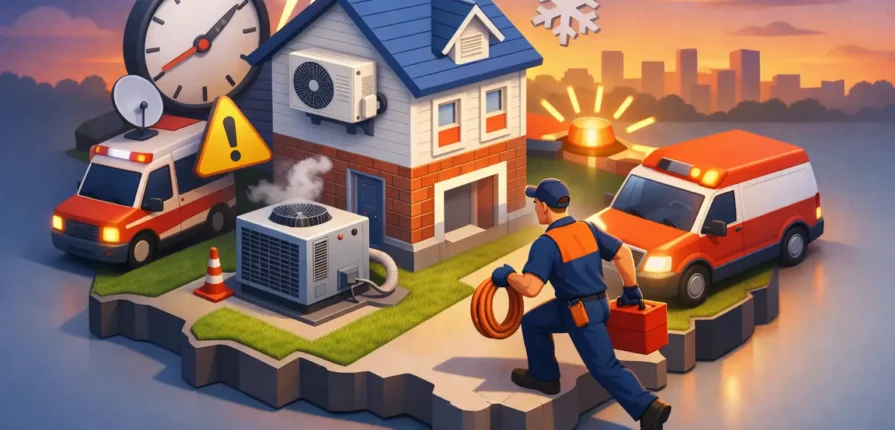
A furnace that quits during an Ohio cold snap is more than an inconvenience. So is an air conditioner that stops moving cold air during a humid summer afternoon. When comfort, safety, or a business operation is on the line, Ohio emergency HVAC service means getting a qualified technician involved quickly – not hoping the system starts again on its own.
The right response depends on what has failed, who is in the building, and what conditions are outside. A system making a minor noise may be able to wait until regular business hours. No heat in a home with young children, older adults, or vulnerable residents should not. The same goes for a commercial space where extreme temperatures can affect employees, customers, equipment, or inventory.
When an HVAC Problem Is a Real Emergency
Not every heating or cooling issue requires an overnight call, but some problems need immediate attention. The clearest example is a complete loss of heat when outdoor temperatures are near or below freezing. Frozen pipes, unsafe indoor temperatures, and damage to the home can follow if the problem is left alone too long.
A complete loss of cooling can also be urgent, especially during high heat and humidity. This matters most when the building has infants, seniors, medical needs, pets, or residents who cannot safely tolerate the heat. For businesses, a cooling failure may threaten server rooms, refrigeration-related areas, or customer comfort during operating hours.
Call for emergency help right away if you notice a burning smell, smoke, sparks, repeatedly tripped breakers, a gas odor, or a carbon monoxide alarm. These are not troubleshooting situations. Leave the area if needed, shut off the system only if it is safe to do so, and contact the appropriate emergency utility or safety service before arranging HVAC repair.
Water around a furnace, air handler, boiler, or indoor AC equipment also deserves prompt attention. A clogged condensate drain can sometimes be a straightforward repair, but ongoing water can damage ceilings, flooring, electrical components, and nearby belongings. If water is spreading, turn the system off at the thermostat and avoid stepping near electrical equipment.
What to Do Before the Technician Arrives
A few practical checks can help protect your system and give the technician a better starting point. First, set the thermostat to the correct mode: Heat for furnace problems or Cool for air conditioning problems. Make sure the temperature setting calls for the system to run. It sounds simple, but thermostat settings, dead batteries, and accidental schedule changes cause a fair number of service calls.
Next, check the filter. A heavily clogged filter restricts airflow and can cause overheating, short cycling, frozen AC coils, and weak heating or cooling. If the filter is visibly packed with dust and you have the correct replacement, change it. Do not keep restarting a system that is shutting down repeatedly, though. That can turn a manageable repair into a larger one.
Look at your electrical panel for a tripped breaker. If one has tripped, you can reset it once. If it trips again, leave it off and call a professional. A breaker that will not stay on may point to an electrical fault, a failing motor, or another issue that should not be forced.
For a gas furnace, confirm that the gas service is on and that the furnace access panel is securely in place. Modern furnaces have safety switches that prevent operation when panels are not seated correctly. Do not attempt to relight or repair gas components if you smell gas. Get out of the building and follow your gas utility’s emergency instructions.
It also helps to write down what happened before the failure. Did the furnace begin making a new sound? Did the AC run but blow warm air? Did the system shut off after a storm or power outage? Those details can save time during an emergency HVAC diagnosis.
Why Waiting Can Cost More
The temptation to wait is understandable. Emergency repairs can feel disruptive, and homeowners naturally want to avoid an unplanned expense. But waiting is not always the budget-friendly choice.
A furnace that is short cycling can strain components every time it starts. An AC system that is frozen can suffer compressor damage if it continues to run. A small leak beneath an air handler can become drywall, flooring, and electrical damage by morning. Early service is often about limiting the scope of the repair, not just restoring comfort faster.
There are times when waiting until the next business day is reasonable. If the system is operating safely, indoor temperatures remain comfortable, and the issue is limited to reduced performance, a scheduled repair may make more sense. Use temporary measures carefully: add layers in winter, close blinds during summer heat, and use portable fans or safe space heaters according to manufacturer instructions. Never use an oven, grill, or unvented fuel-burning appliance to heat a home.
What a Good Emergency HVAC Visit Should Look Like
An emergency call should not feel like a guessing game. A trained technician should begin with a clear assessment of the problem, including the thermostat, electrical connections, airflow, safety controls, and the mechanical components related to the failure.
For a heating problem, that may include checking ignition, flame sensing, venting, blower operation, fuel delivery, limit switches, and the condition of the filter. For an air conditioning failure, the technician may inspect capacitors, contactors, coils, drain lines, motors, refrigerant-related symptoms, and electrical components. The exact process depends on the equipment and the symptoms, but the goal is the same: identify the cause rather than simply get the system to run for a few minutes.
You should receive a plain explanation of what failed, what needs to be repaired now, and whether there are options. Some repairs are straightforward and can be completed during the visit. Others may require a specialized part or expose a larger issue with an older system. Honest guidance includes both the immediate fix and the realistic condition of the equipment.
At Professional Trade Service, the focus is on helping homeowners and property managers make an informed decision without unnecessary runaround. With more than 40 years of industry experience and 24/7 availability, the job is to find the problem, explain it clearly, and get your comfort system back on track.
Emergency HVAC Service for Homes and Properties
For a homeowner, the priority is usually restoring safe, dependable comfort as quickly as possible. For a property manager or small business owner, there can be more moving parts: tenant communication, access to equipment rooms, multiple systems, operating hours, and concerns about equipment damage. An experienced service provider can work through those details without losing sight of the immediate issue.
Central Ohio weather can put both heating and cooling equipment through hard seasonal swings. Systems in Sunbury, Lewis Center, Powell, and nearby communities often run long hours during peak weather, particularly if equipment is older, oversized, undersized, or overdue for maintenance. Emergency repair gets the immediate issue handled, but it can also reveal what the system has been trying to signal for months.
Preventing the Next After-Hours Breakdown
The best emergency call is the one you never need to make. Preventive maintenance cannot eliminate every failure, especially with aging equipment, but it gives a technician the chance to catch worn parts, dirty components, poor airflow, drainage problems, and safety concerns before the system is under its heaviest load.
A furnace tune-up before cold weather and an AC check before summer are practical investments. Regular filter changes matter too. The right schedule depends on the filter type, household, pets, and system use, but a filter should be checked monthly and changed when dirty. Keeping outdoor AC equipment clear of leaves, grass, and debris also supports better airflow.
If your heating or cooling system has needed several repairs in a short period, ask for a straightforward assessment of repair versus replacement. A repair may still be the right answer, particularly when the problem is isolated and the equipment has useful life left. But repeated breakdowns, rising energy bills, and difficulty finding parts can change the math. A good contractor will explain the trade-offs instead of pushing a replacement before it makes sense.
When your system stops at the worst possible time, stay focused on safety, avoid repeated restarts, and get help before a small problem grows. Fast, professional service can protect your home, your property, and the people who depend on it.
Recent Comments