
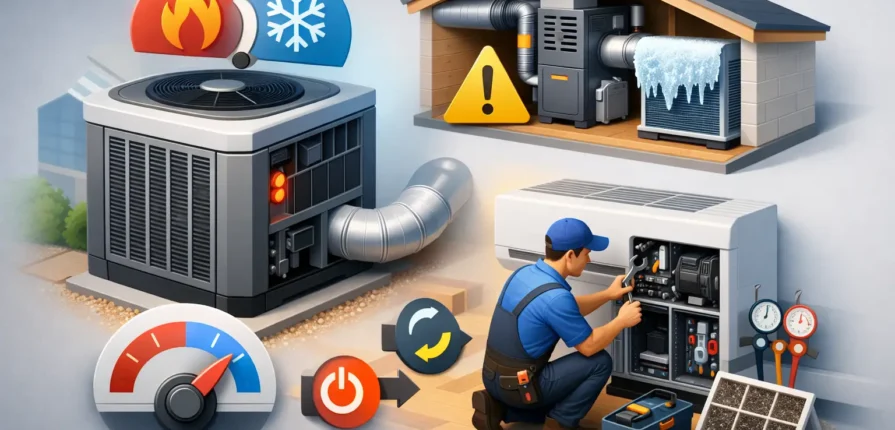
A furnace or air conditioner should run long enough to bring your home to the temperature on the thermostat. When it starts, stops after a few minutes, then starts again soon after, that is called short cycling. The top causes of HVAC short cycling range from a simple dirty filter to a serious equipment or installation problem. Either way, repeated short cycles waste energy, add wear to expensive parts, and can leave your home uncomfortable when Ohio weather turns extreme.
A system that short cycles once during a mild day is not always in trouble. But if it happens repeatedly, especially when the system is trying to keep up, it is time to pay attention. Turning the thermostat farther up or down will not fix the underlying issue. It may only make the equipment work harder.
What HVAC Short Cycling Looks Like
Most heating and cooling systems run in cycles that often last around 10 to 20 minutes, though outdoor temperature, insulation, system size, and thermostat settings all affect that timing. Short cycling usually means the equipment runs for only a few minutes before shutting off, then repeats the pattern.
You may hear the furnace or outdoor AC unit kick on and off several times in an hour. Rooms may feel uneven, utility bills may climb, and the system may struggle to reach the set temperature. In a gas furnace, frequent shutdowns can also point to a safety control doing its job by stopping the unit before it overheats.
Do not ignore burning smells, a gas odor, loud metal banging, water around the unit, or a breaker that keeps tripping. Turn the system off and arrange professional service. If you smell natural gas, leave the area and contact your gas utility or emergency services from a safe location.
Top Causes of HVAC Short Cycling
A clogged air filter or restricted airflow
A blocked filter is one of the most common and most preventable causes. When the filter is loaded with dust, pet hair, or construction debris, the blower cannot move enough air through the system. In cooling mode, restricted airflow can cause the indoor coil to get too cold and freeze. In heating mode, it can cause the furnace to overheat and trip its high-limit safety switch.
A clogged filter is not the only airflow problem. Closed supply registers, blocked return vents, dirty blower components, crushed ductwork, or an undersized return duct can create the same trouble. Homeowners sometimes close vents in unused rooms to save money, but doing so can reduce airflow enough to harm system performance.
Check the filter first and replace it if it is dirty. Use the filter type and size recommended for your system. Extremely restrictive filters can also create airflow problems if the equipment was not designed for them. If a fresh filter does not stop the short cycling, a technician should check the blower, ducts, coils, and static pressure.
A thermostat in the wrong location or with a wiring issue
The thermostat tells the HVAC system when to start and stop. If it is installed near a sunny window, exterior door, kitchen, fireplace, supply vent, or other heat source, it can sense a temperature that does not represent the rest of the house. The system may satisfy the thermostat quickly, shut down, and leave other rooms uncomfortable.
A loose wire, failing thermostat, weak batteries, or incorrect setup can also cause rapid cycling. This is especially common after a thermostat replacement or a recent renovation. Smart thermostats are useful, but they need to be configured for the correct type of furnace, air conditioner, or heat pump.
Try replacing thermostat batteries if applicable and make sure it is set to heat or cool rather than fan-only mode. Avoid moving wires or opening the control panel yourself. Low-voltage wiring mistakes can damage controls and create a larger repair.
An oversized heating or cooling system
Bigger is not always better. An oversized furnace or air conditioner can heat or cool the space too quickly, causing it to shut off before it completes a proper cycle. The house may technically reach the thermostat setting, but comfort suffers because air does not circulate long enough and humidity is not removed effectively during air conditioning season.
Oversizing can happen when a system is replaced based only on the old unit’s capacity rather than a proper load calculation. It can also become more noticeable after insulation, windows, or other home improvements reduce the home’s heating and cooling load.
There is no quick adjustment that makes an oversized unit the right size. A qualified technician can check airflow, thermostat performance, staging, and equipment settings to rule out repairable problems first. If replacement is eventually needed, the new system should be sized for the home as it stands today, not guessed at from square footage alone.
Low refrigerant or an AC refrigerant leak
Air conditioners and heat pumps need the correct refrigerant charge to transfer heat properly. When refrigerant is low, often because of a leak, the evaporator coil can freeze and the system may cycle on safety controls. You may notice weak cooling, warm air from vents, ice on refrigerant lines, hissing sounds, or higher electric bills.
Refrigerant does not get used up like fuel. If the charge is low, the system needs leak detection and repair before refrigerant is added. Simply topping it off may provide temporary cooling, but it does not solve the leak or protect the compressor.
Turn the cooling system off if you see ice. Continuing to run it can damage the compressor. Letting it thaw may be necessary before diagnosis, but avoid chipping at ice or trying to open any refrigerant components yourself.
Dirty condenser or evaporator coils
The indoor evaporator coil and outdoor condenser coil must release and absorb heat efficiently. Dirt on either coil acts like a blanket. The system runs hotter, works longer, and may trip safety controls or cycle irregularly.
Outdoor condensers are exposed to grass clippings, cottonwood, leaves, and dirt. Keep plants and stored items away from the unit so it can breathe. Do not use a pressure washer or bend the delicate coil fins. Indoor coil cleaning is even more sensitive and is usually part of a professional maintenance visit.
A clean filter helps protect the indoor coil, but it does not eliminate the need for regular seasonal maintenance. Catching coil buildup early can prevent a short-cycling complaint from becoming a compressor or blower failure.
Furnace overheating or a failed safety control
If your furnace starts, burners ignite, and the blower shuts down or the burners cut out after a short time, overheating may be involved. A high-limit switch is designed to shut the burners off when temperatures inside the furnace become unsafe. The furnace may restart after it cools, creating a frustrating on-and-off pattern.
Restricted airflow is a frequent reason, but the issue may also involve a dirty flame sensor, failing blower motor, weak capacitor, malfunctioning control board, blocked flue, or a problem with the inducer motor. High-efficiency furnaces can also short cycle when the condensate drain or venting system is blocked.
Because combustion equipment involves gas, venting, and carbon monoxide safety, this is not a repair to put off. Carbon monoxide detectors should be installed and working on every level of the home, especially near sleeping areas.
A dirty flame sensor or ignition problem
A gas furnace may begin a heating cycle normally, then shut off its burners within seconds because the flame sensor cannot confirm a stable flame. The system may try again several times before locking out. From the homeowner’s perspective, it can look like short cycling.
A dirty flame sensor is often a straightforward repair, but repeated ignition failures can also point to gas pressure, burner, control, or venting issues. A trained HVAC technician can test the sequence of operation and identify the actual cause instead of replacing parts based on guesswork.
Electrical problems and failing components
Short cycling can be caused by a weak run capacitor, failing contactor, loose electrical connection, compressor problem, or a control board that is not communicating properly. A breaker that trips, buzzing at the outdoor unit, or lights that dim when the system starts are warning signs worth taking seriously.
Electrical diagnosis requires the right test equipment and training. HVAC equipment contains high voltage even when the thermostat is off. Professional Trade Service can inspect both HVAC and related electrical concerns, which can save time when the problem is not clearly limited to the heating or cooling equipment.
What You Can Safely Check Before Calling
Start with the basics: verify that the thermostat is set correctly, replace a dirty filter, make sure supply and return vents are open and unobstructed, and clear leaves or debris from around the outdoor unit. If your furnace uses a condensate pump, look for obvious water overflow nearby. These simple checks can sometimes restore normal operation.
Do not keep resetting a breaker, bypass a safety switch, add refrigerant, or repeatedly restart equipment that is shutting down on its own. Safety controls are there for a reason. Continued operation can turn a smaller repair into a damaged compressor, cracked heat exchanger, or failed blower motor.
When Short Cycling Needs Prompt Service
Schedule service soon if the problem continues after a filter change, if your home will not hold temperature, or if your energy bill jumps without a clear reason. Call for immediate help when you notice gas odors, electrical burning smells, ice buildup, water leaks, repeated breaker trips, or a furnace that will not stay lit.
For homeowners and property managers in Sunbury, Lewis Center, Powell, and nearby central Ohio communities, fast diagnosis matters most when the weather is severe. A technician can measure airflow, inspect controls, test electrical components, check refrigerant performance, and determine whether the issue is repairable or connected to equipment sizing.
A short-cycling system is asking for attention before it fails completely. Address it early, and you have a better chance of protecting your comfort, your budget, and the equipment you rely on every day.
Recent Comments