
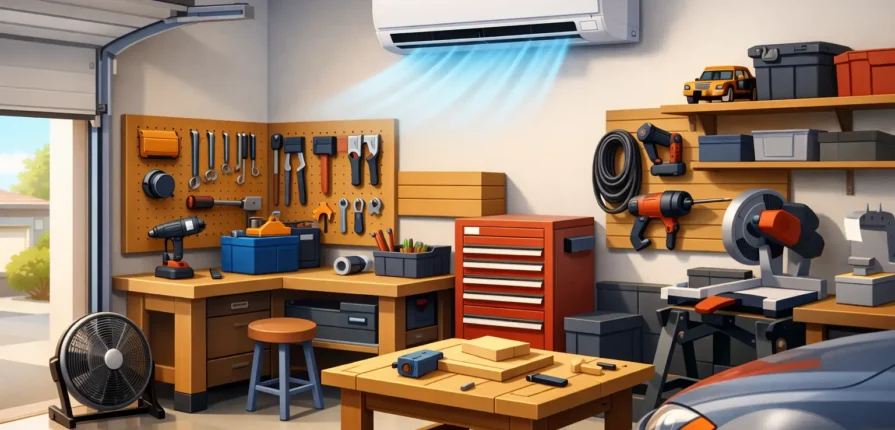
A mini split for garage workshop comfort can turn a space that is too hot in July and too cold in January into a place you can actually use. Whether you work on vehicles, build furniture, run a small business, or simply need a better spot for weekend projects, temperature control makes the garage more useful. The key is choosing equipment that matches the room, the insulation, and Ohio’s weather instead of buying a unit based on square footage alone.
A ductless mini split provides both heating and air conditioning through one outdoor unit and one or more indoor air handlers. It is often a strong fit for garages because it does not require ductwork, gives you room-by-room control, and can operate more efficiently than portable heaters, window units, or an oversized central system.
Why a Mini Split Works Well in a Garage Workshop
Most garages were not built with comfort in mind. They may have uninsulated doors, concrete floors, air leaks around framing, and little separation from outdoor temperatures. Adding ductwork from the home is often expensive, difficult to balance, and may put extra strain on the existing furnace and air conditioner.
A mini split solves a different problem. It conditions the workshop as its own zone. You can keep the space cooler while you are working without freezing the rest of the house, then turn it down when the job is done. Modern inverter-driven systems adjust their output as conditions change, which helps avoid the all-on, all-off cycling common with basic window units and electric space heaters.
For central Ohio homeowners, heating performance matters as much as cooling. A cold-climate heat pump mini split can provide useful heat well below freezing. That said, not every model is designed for the same low temperatures. A system that works fine in a mild climate may lose capacity when an Ohio cold snap arrives. Equipment selection needs to account for the unit’s published low-ambient heating capability, not just its cooling rating.
Start With the Garage, Not the Equipment Size
The most common mistake is installing a mini split that is too large. Bigger is not automatically better. An oversized unit can cool the room quickly but shut off before it removes enough humidity. It may also cycle more often, which hurts comfort and efficiency. A unit that is too small will run hard and struggle on the hottest or coldest days.
Square footage is a starting point, not a final answer. A 400-square-foot garage with insulated walls, a finished ceiling, and a tight insulated door has a very different heating and cooling load than a 400-square-foot garage with open rafters and a drafty metal door.
A proper evaluation should consider ceiling height, wall and ceiling insulation, garage-door insulation, window area, sun exposure, air leakage, and whether the garage is attached or detached. It should also account for heat from equipment. A workshop with welders, compressors, lighting, vehicle engines, or several people working inside can build heat quickly.
In many one- or two-car garages, a 9,000- or 12,000-BTU system may be enough after insulation upgrades. Larger spaces, high ceilings, poor insulation, or multiple garage bays may need more capacity or more than one indoor zone. The right answer comes from a load calculation and an on-site look at the building.
Insulation Often Pays Before HVAC Equipment
If you can feel winter air around the garage door or see bare attic framing above the workspace, deal with those issues first. Insulating the ceiling below an unconditioned attic, weatherstripping the door, sealing obvious gaps, and insulating exterior walls can reduce the size of system you need. Those upgrades also make the mini split quieter, more effective, and less expensive to operate.
Do not overlook the garage door. It is usually the largest weak point in the room. An insulated door with good perimeter seals can make a noticeable difference, especially in a workshop where you spend hours near the door.
Installation Details That Matter
A mini split has an indoor air handler, an outdoor condenser, refrigerant lines, a condensate drain, and electrical connections. The indoor unit is commonly mounted high on a wall, where it can distribute air across the room. It should not be blocked by tall shelving, cabinets, or a vehicle lift.
Avoid placing the indoor head directly over a bench where sawdust, metal shavings, paint overspray, or other airborne debris are constant. Workshops can be hard on HVAC equipment. A location with clear airflow and reasonable access for filter cleaning will make maintenance easier.
The outdoor unit needs a stable pad or wall bracket, adequate clearance for airflow, and protection from roof runoff, snow buildup, and physical damage. In a driveway or tight side yard, it should also be placed where vehicles, lawn equipment, or snowplows cannot easily hit it.
Electrical planning is just as important. Most garage mini splits require a dedicated 240-volt circuit, a properly sized disconnect, and electrical work that meets local code. If the panel is full or the garage wiring is outdated, the project may require an electrical upgrade. That is not a reason to avoid the project, but it should be identified before installation day instead of becoming a surprise afterward.
Heating a Workshop During Ohio Winters
A quality cold-climate mini split can be an efficient primary heat source for many garages, but the building envelope still decides much of the outcome. With poor insulation and frequent door openings, even a good system has limits. If you regularly open a large overhead door in freezing weather, expect a recovery period after the door closes.
Defrost cycles are also normal. In cold, damp weather, frost can form on the outdoor coil. The system periodically switches modes to clear that frost, briefly reducing indoor heat output. Correct sizing, proper placement, and equipment designed for colder temperatures help manage this. An experienced installer can also discuss whether supplemental heat makes sense for your specific workshop use.
If the garage stores water lines, paint, chemicals, or valuable tools, maintaining a minimum temperature while you are away may be worthwhile. Setbacks can save energy, but letting the room get extremely cold may make recovery slow and increase the chance of freezing problems in certain setups.
Keep Workshop Air Cleaner and the System Running Right
A mini split filter is not a replacement for dust collection or fume ventilation. If you sand wood, spray finishes, weld, work with solvents, or run engines indoors, you need proper source control and ventilation. Carbon monoxide from vehicle exhaust or fuel-burning equipment is a serious safety hazard. Never rely on a mini split to make those activities safe.
Routine care is straightforward but necessary. Clean or rinse the indoor filters regularly, especially during dusty projects. Keep the outdoor unit free of leaves, grass, snow, and stored materials. Have the system checked before heavy heating or cooling season so refrigerant levels, drains, electrical connections, and operating performance can be inspected.
A neglected filter restricts airflow, reduces capacity, and can lead to avoidable service calls. For a busy workshop, checking the filter monthly is a practical habit.
When a Mini Split May Not Be the Best Choice
A mini split is not the right answer for every garage. If the space is used only a few times each winter, a simpler electric heater may cost less upfront. If the workshop has major open-air use, constant overhead-door traffic, or heavy contaminants, the first investment may need to be insulation, ventilation, or dust control.
For a large commercial shop with multiple work bays, high ceilings, and regular vehicle movement, a larger commercial heating and cooling design may be a better fit than a single wall-mounted unit. The goal is not to force one product into every building. It is to install a system that performs reliably for the way you actually use the space.
Before choosing a mini split, have the garage evaluated as a complete system: insulation, electrical capacity, airflow, winter heating needs, and workshop safety. Professional Trade Service can help homeowners in the Sunbury and Lewis Center area sort out those details and install equipment built for dependable year-round comfort. A workshop should support the work you enjoy, not send you back inside when the weather turns.
Recent Comments