
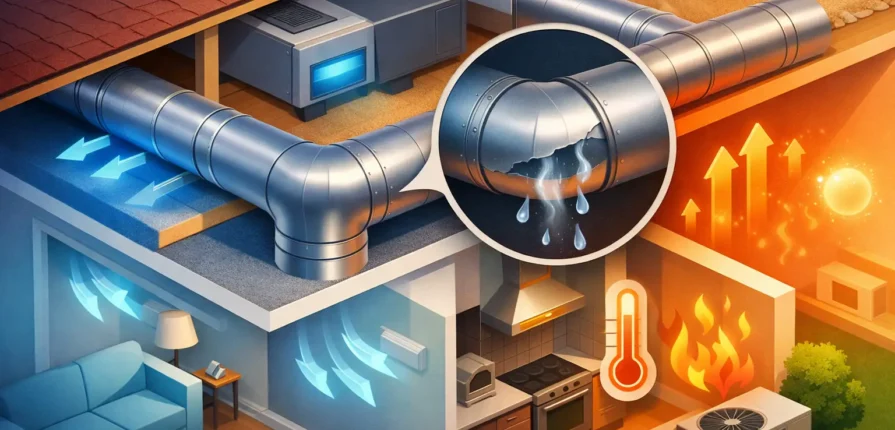
A furnace or air conditioner can be running exactly as it should and still leave part of your home uncomfortable. The problem may be the ductwork carrying conditioned air through the attic, basement, crawl space, or walls. Knowing how to spot duct leaks can help you catch a hidden efficiency problem before it turns into higher utility bills, uneven rooms, and extra wear on your HVAC equipment.
Duct leaks are especially common in older homes, homes with unfinished basements or attics, and properties where renovations changed walls, ceilings, or mechanical systems. Some leaks are easy to see. Others sit behind drywall or insulation and need a trained technician to find accurately.
What Duct Leaks Actually Do
Your ducts are meant to move heated or cooled air from the HVAC system to each room, then bring return air back to the equipment. When joints separate, flexible duct tears, or connections come loose, that air escapes before it gets where it belongs.
A leak on the supply side sends paid-for heated or cooled air into an attic, crawl space, or basement. A return-side leak can pull dusty, humid, musty, or unconditioned air into the system. Both situations make your equipment work harder than it should.
That extra workload matters during central Ohio weather. A small duct problem that seems manageable in mild spring weather can become much more noticeable during a humid summer stretch or a cold winter night.
Signs That Help You Spot Duct Leaks
No single symptom proves that your ductwork is leaking. However, several signs together are a good reason to schedule an HVAC inspection.
Some Rooms Never Match the Thermostat
A room that stays too warm in summer or too cool in winter is one of the most common warning signs. You may notice it most in a second-story bedroom, a room over a garage, an addition, or a space at the far end of the house.
Poor room comfort can also come from weak insulation, sun exposure, undersized ducts, or a system that is not sized correctly. That is why the right answer is not always to close vents in other rooms or turn the thermostat lower. Those shortcuts can create airflow problems elsewhere. A technician should look at the whole system before recommending a repair.
Your Energy Bills Rise Without a Clear Reason
Utility costs can climb because of rate changes, extreme weather, aging equipment, or more people spending time at home. But if your usage is higher than usual and your comfort has not improved, duct leakage is worth investigating.
Leaky ducts waste energy in a frustrating way: the system runs longer, but some of the air you paid to heat or cool never reaches your living space. If your furnace or AC seems to run constantly yet certain rooms still feel wrong, do not assume replacement is the only answer. The duct system may be part of the problem.
Airflow Feels Weak at Certain Vents
Hold your hand near supply registers while the system is running. If one vent has noticeably weaker airflow than similar vents in the home, it may point to a disconnected duct, crushed flexible duct, damper issue, blocked register, or leak in that branch line.
Check that furniture, rugs, and curtains are not blocking the register first. If the vent is clear and airflow is still weak, avoid forcing it open or trying to reach into the duct. A loose connection may be in an attic or wall cavity where a homeowner cannot safely access it.
You See Dust Around Registers or Notice Musty Air
A return duct leak can draw air from places it should not, including attics, crawl spaces, garages, and unfinished areas. That may lead to more dust around vents, stale odors, or a musty smell when the blower turns on.
Dust alone does not automatically mean you need duct cleaning. Normal household dust, a dirty filter, and air leaks around register boots can cause similar symptoms. Still, if dust returns quickly after cleaning and you also have comfort or airflow issues, have the ductwork checked.
You Hear Whistling, Rattling, or Air Moving Where It Should Not
A sharp whistle near a vent, a rushing sound above a ceiling, or rattling when the blower starts can signal a loose connection or gap. Pay attention to when the noise occurs. If it starts only when heating or cooling is running and stops when the blower shuts off, the duct system deserves a closer look.
Not every HVAC noise comes from ductwork. A blower motor, refrigerant line, furnace cabinet, or loose register can make noise too. The useful detail is the location and timing, which helps a technician narrow down the source faster.
Where to Look for Visible Duct Problems
If you can safely access an unfinished basement, utility room, garage, or attic, a basic visual check can reveal obvious issues. Keep clear of electrical wiring, exposed nails, unstable attic flooring, and hot equipment. Never step between attic joists.
Look for separated metal duct joints, disconnected flexible ducts, torn insulation jackets, crushed flex duct, and dark streaks around seams. Dust often collects where air is escaping or being pulled in. You may also find old cloth-backed tape peeling away from a connection.
Despite the name, standard duct tape is not a dependable long-term duct repair. Temperature changes and age can cause it to fail. Professional repairs typically use approved mastic, properly rated foil tape, mechanical fasteners where needed, and insulation repairs for ducts outside the conditioned part of the home.
Do not seal over a problem you have not identified. For example, a loose connection may need to be reattached and supported before it is sealed. Simply adding tape can hide the issue for a while without restoring proper airflow.
Simple Checks You Can Do Without Damaging Anything
Start with the basics. Replace a clogged air filter with the correct size and type, make sure supply and return registers are open, and remove furniture blocking vents. A heavily restricted filter can mimic airflow problems and make a healthy duct system look weak.
Next, run the heating or cooling system and walk through the home. Compare room temperatures, listen near vents, and note which areas feel uncomfortable. If accessible ducts are visible, look for movement at joints or obvious gaps while the blower is operating.
Avoid using candles, lighters, or any open flame to test airflow. They are not safe around HVAC equipment, and they are especially risky near gas appliances. Smoke-based testing may be useful in professional hands, but it is not a reason to experiment around a furnace, water heater, or electrical equipment.
Keep a short record of what you notice: which rooms are affected, whether the issue is worse during heating or cooling, how long the system runs, and whether you hear unusual sounds. Clear details help avoid guesswork when service is scheduled.
When a Professional Duct Inspection Makes Sense
Call for an HVAC evaluation if you have persistent hot and cold rooms, unexplained high bills, recurring dust issues, visible damaged ducts, or a system that runs longer than it used to. This is also a smart step before replacing an aging furnace or air conditioner. Installing new equipment without addressing major duct problems can leave you with the same comfort complaints.
A professional inspection goes beyond looking at exposed ductwork. A technician can check airflow, inspect accessible connections, evaluate return and supply performance, look for sizing or design concerns, and determine whether leakage is likely affecting system operation. In some homes, the best repair is targeted sealing at a few accessible joints. In others, damaged runs may need repair or replacement.
The right fix depends on the age of the ducts, where the leaks are located, the condition of insulation, and whether the system has broader airflow issues. Honest diagnostics matter because duct sealing is not a one-size-fits-all repair.
For homeowners and property managers in the Sunbury and Lewis Center area, Professional Trade Service can inspect the HVAC system, explain what is causing the problem, and recommend practical repair options. If your home is comfortable in only a few rooms while the equipment keeps running, do not keep paying to condition the attic or basement. A careful duct inspection can point you toward a fix that makes the whole system work the way it should.
Recent Comments