
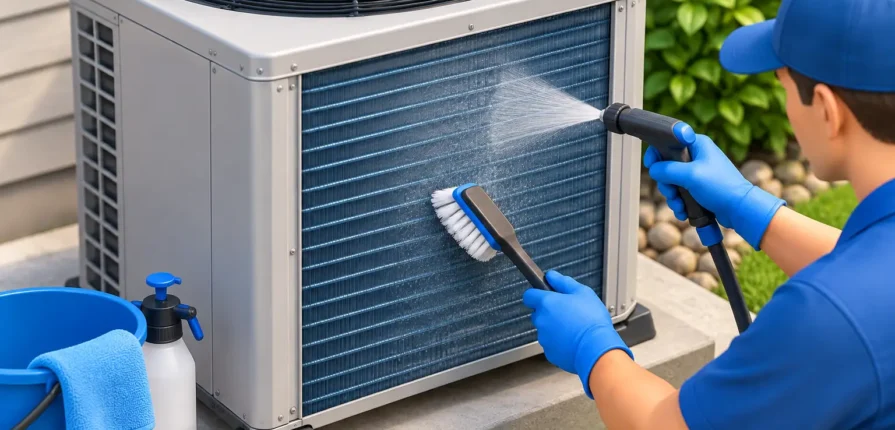
Your outdoor AC unit does not need to look filthy to have a coil problem. A light blanket of cottonwood, grass clippings, mulch, and dust can trap heat where your system needs to release it. Knowing how to clean condenser coils can help protect cooling performance, but doing it the wrong way can bend delicate fins, damage wiring, or leave the unit worse than before.
For most homeowners, this is a basic maintenance job once or twice a year. The key is using a gentle approach, shutting off power first, and knowing when the buildup or poor cooling points to a problem beyond a dirty coil.
What condenser coils do for your air conditioner
The condenser coil sits around the outside portion of your central air conditioner or heat pump. Refrigerant carries heat from inside your home to this outdoor coil. A fan pulls outdoor air through the coil, allowing that heat to leave the system.
When the coil is coated in debris, air cannot move through it as easily. The system may run longer, cool less effectively, and use more electricity. In severe cases, the compressor can overheat or the unit can shut down on a safety control. Cleaning the coil is not a cure for every AC issue, but it is one of the most useful maintenance steps a homeowner can take.
Central Ohio summers bring their share of pollen, lawn debris, and cottonwood. If your condenser is near landscaping, a dryer vent, a gravel drive, or a busy commercial area, it may need attention more often than a unit in a clear, open space.
Before you clean condenser coils, put safety first
Never clean an outdoor condenser while power is on. Find the electrical disconnect box mounted near the outdoor unit and turn it off. Many have a pull-out handle or switch. For added protection, turn off the air conditioner breaker at your electrical panel as well.
The outdoor unit contains electrical components, sharp sheet-metal edges, and fragile aluminum fins. Wear gloves and eye protection. Do not use a pressure washer, a stiff wire brush, or a narrow, high-pressure hose setting. Those tools can flatten fins and restrict airflow permanently.
Also, do not spray water into the electrical disconnect, the fan motor, or the control compartment. Light water on the coil is expected. Flooding electrical parts is not.
What you need for the job
You do not need a truck full of specialty equipment for light seasonal cleaning. Gather a garden hose with a spray nozzle, gloves, eye protection, a soft brush or vacuum with a brush attachment, and a commercial condenser coil cleaner made for outdoor HVAC equipment if the coil is oily or heavily soiled.
Read the label before using coil cleaner. Some products are ready to use, while others must be diluted. A stronger chemical is not automatically better. Using the wrong product or concentration can harm the coil, nearby landscaping, or the unit’s finish.
How to clean condenser coils safely
Start by clearing the area around the unit. Remove leaves, sticks, grass, and loose mulch from the base and around the sides. Trim shrubs and plants back so there is at least 18 to 24 inches of open space around the condenser. The top should be clear too. Your AC needs room to pull in air and push heat out.
Next, inspect the outside coil surface. On many units, you will see thin metal fins behind a protective grille. Use a soft brush or vacuum brush attachment to carefully remove loose debris from the outside. Work lightly and avoid pressing into the fins.
For a normal seasonal rinse, spray the coil with a gentle stream of water. Begin at the top and work downward. Keep the spray broad and controlled, not concentrated like a pressure-washer tip. Rinsing from the inside out is often more effective because it pushes dirt back out the way it entered, but reaching the inside may require removing the top fan assembly or access panels. Unless you are comfortable handling those parts, rinse the exterior and leave deeper cleaning to a technician.
If the coil has a visible film of grime that water will not remove, apply an HVAC-approved coil cleaner according to its directions. Allow it to work for the recommended time, then rinse thoroughly. Keep cleaner off electrical components and avoid letting it sit longer than directed.
When you finish, check the fins for bent sections. A few bent fins are common, especially on an older unit. A fin comb can straighten minor damage when matched to the correct fin spacing, but this is easy to overdo. If a large portion of the coil is crushed or matted, professional service is the safer move.
Let the unit drain and dry for a short time, restore power, and set your thermostat to cool. Listen for normal operation and confirm that the outdoor fan starts. Cool air should begin moving from indoor vents after the system has had time to run.
Do not make these common mistakes
The biggest mistake is using excessive water pressure. Condenser fins are thin because they are designed to transfer heat efficiently, not because they can withstand a pressure washer. Once fins are flattened, airflow drops and the repair may require extensive straightening or coil replacement.
Another common mistake is closing in the outdoor unit with decorative fencing, dense shrubs, or stacked storage items. A clean coil still cannot work properly if the condenser has no room to breathe. Keep lawn furniture, trash cans, toys, and yard equipment away from it.
Finally, do not assume every cooling issue is dirt-related. If your home is warm, your system runs constantly, or the breaker trips, the cause could be low refrigerant, a failing capacitor, a blower problem, a dirty indoor evaporator coil, duct leakage, or an electrical issue. Washing the outdoor coil will not correct those problems.
When a homeowner cleaning is enough, and when it is not
A simple rinse is usually enough when debris is loose, the system is cooling normally, and the coil has no heavy grease or damage. It is a good habit before the cooling season and again after heavy cottonwood or landscaping activity.
Call an HVAC professional when the coil is packed with dirt behind the grille, the fins are badly bent, or you need to remove panels to clean it correctly. The same applies if the outdoor unit is noisy, iced over, short-cycling, leaking, or failing to keep the house comfortable. Those signs deserve a real diagnosis, not guesswork.
For property managers and small business owners, routine coil cleaning is especially worthwhile. Commercial equipment often sits near parking areas, kitchen exhaust, landscaping, or high-traffic zones where dirt builds up faster. A maintenance visit can catch airflow restrictions before they become a mid-season comfort complaint or an expensive emergency call.
Make coil care part of regular AC maintenance
Cleaning the condenser coil works best as part of a larger maintenance routine. Replace or clean indoor air filters on schedule, keep supply vents open, clear the condensate drain as recommended, and schedule a professional AC checkup before peak summer heat. A technician can inspect electrical connections, refrigerant operation, capacitors, blower performance, and the indoor coil – items that are not safely handled with a garden hose.
Professional Trade Service helps homeowners and property managers in the Delaware area keep cooling systems ready for hot weather, from routine maintenance to urgent repairs. If your coil is too dirty to clean safely, or your AC still struggles after a careful rinse, getting an experienced technician on site can prevent a small airflow problem from turning into a system breakdown.
A clean condenser coil gives your air conditioner a better chance to do its job. Treat it gently, give it adequate clearance, and do not wait for a complete loss of cooling before asking for help.
Recent Comments