
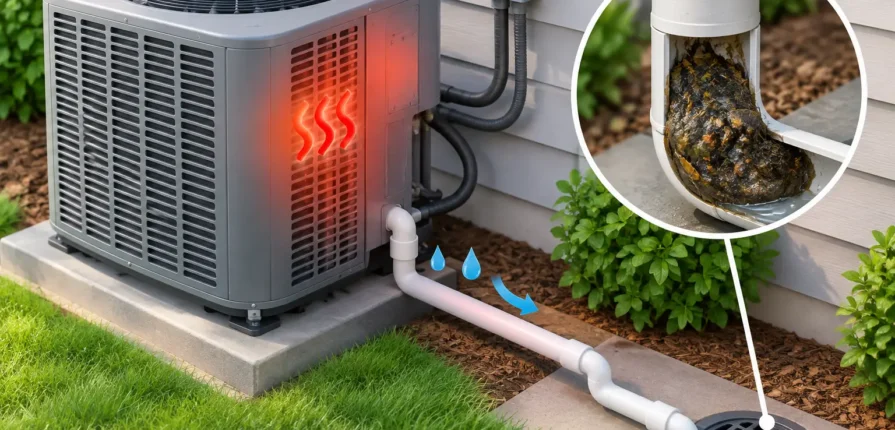
A wet spot near your furnace or air conditioner is easy to dismiss as a plumbing issue. But can a clogged drain damage HVAC equipment? Yes, especially when the blocked drain is the system’s condensate line. Left alone, backed-up water can trigger shutdowns, damage nearby materials, encourage mold growth, and lead to repairs that could have been avoided.
The good news is that a clogged condensate drain is often preventable and usually repairable when caught early. The key is knowing which drain is involved, what warning signs to watch for, and when to call for help.
Can a clogged drain damage HVAC equipment?
Your HVAC system and your home’s plumbing system serve different jobs, but water problems can affect both. An air conditioner and a high-efficiency furnace create condensation as they operate. That moisture drains through a small pipe called a condensate drain line, usually to a floor drain, utility sink, exterior termination, or condensate pump.
When that line clogs with algae, dust, rust, sludge, or debris, water has nowhere to go. It can fill the drain pan and overflow into the equipment cabinet or onto the floor. In some systems, a float switch shuts the unit down before an overflow occurs. That safety feature protects your home, but it can leave you without cooling on a hot Ohio afternoon.
A clogged plumbing drain can also create trouble if it causes a basement or utility room flood. Water around a furnace, air handler, electrical connections, or ductwork should never be ignored. The extent of damage depends on how much water is present, how long it sits, and whether it reaches electrical components.
What a blocked condensate line can do
The first consequence is often a loss of cooling. Many newer systems have an overflow safety switch that stops the air conditioner when water rises in the pan. The thermostat may still appear normal, but the outdoor unit or indoor blower may not run as expected.
If there is no safety switch, or if it fails, overflow water can damage insulation, drywall, flooring, ceiling materials, and items stored nearby. In an attic installation, even a small leak can stain a ceiling or cause much larger water damage below.
Inside the equipment, standing water can contribute to corrosion. It may affect the evaporator coil area, drain pan, wiring, circuit boards, and blower components. Not every clog turns into a major repair, but repeated overflows and prolonged moisture raise the risk.
Moisture also creates the conditions mold and mildew need. That can mean musty odors around vents or in the mechanical room. It does not automatically mean mold is growing throughout your ductwork, but it does mean the source of moisture needs prompt attention.
A high-efficiency furnace has a drain line, too
Homeowners often associate condensate problems only with air conditioning. A high-efficiency gas furnace also produces water as it vents combustion gases. Its condensate trap and drain tubing can clog or freeze, particularly during cold weather.
A blocked furnace condensate drain can cause the furnace to shut down, display an error code, or leak around the unit. Because furnace drainage is tied to safe operation, this is not a problem to put off until the weekend. If your furnace will not run and you see water around it, turn the thermostat off and arrange service.
Signs your HVAC drain may be clogged
Some symptoms are obvious, while others look like a larger equipment failure. Pay attention if you notice water around the indoor unit, a full or overflowing drain pan, or an air conditioner that stops running even though the thermostat is set to cool.
Other common clues include a musty smell near the furnace or air handler, unusually high indoor humidity, water stains on a ceiling below an attic unit, or a condensate pump that runs constantly without clearing the water. If your system uses a clear drain tube, visible dark buildup or standing water in the line is another warning sign.
Do not assume every HVAC leak is a clogged drain. A frozen evaporator coil, damaged drain pan, disconnected pipe, failed condensate pump, or plumbing leak can produce similar symptoms. A technician should identify the source before anyone treats it as a simple clog.
What to do when you find water near the unit
Start by protecting people and property. If water is close to electrical wiring, a furnace control board, or an air handler, do not reach into the unit or try to remove panels. Turn the thermostat off. If it is safe to do so and you know which breaker serves the system, shut off power to the equipment as well.
Move boxes, furniture, and valuables out of the wet area. Use towels or a wet-dry vacuum to limit floor damage, but do not run the HVAC system until the drainage issue is corrected. Continuing to operate it can add more water to an already backed-up pan.
Avoid pouring harsh drain chemicals into an HVAC condensate line. These products can damage components, create fumes, and make a technician’s job less safe. Bleach is also not a cure-all. A professional can clear the line correctly, inspect the drain pan and trap, test the safety switch, and confirm water is flowing where it should.
If the water came from a sewer backup or a major plumbing overflow, treat it as a separate urgent problem. Contaminated water should not be handled like ordinary condensate. Keep the HVAC off if water has reached the equipment, and have both the plumbing issue and HVAC system checked before restarting it.
Why this problem keeps coming back
Condensate lines are small, damp, and dark, which makes them a natural place for biological growth to build up. During cooling season, the system may produce gallons of water each day. Dust that gets past filters, construction debris, and rust particles can add to the blockage.
Poor installation can make recurring clogs more likely. Drain pipes need the right slope, properly installed traps, secure connections, and a cleanout point that allows service. A line with low spots can hold water and collect debris. A poorly supported line may shift until it no longer drains correctly.
In some homes, the drain line empties into a condensate pump because gravity drainage is not possible. The pump reservoir, float, discharge tubing, or check valve can fail. If you hear the pump humming but water is not moving, or if the pump never runs when it should, schedule service rather than waiting for an overflow.
Preventing drain damage before cooling season
A yearly HVAC maintenance visit is the simplest way to catch drainage issues early. During a proper checkup, the technician should inspect and clear the condensate drain, check the pan for cracks or rust, test the float switch, and verify that any condensate pump operates correctly.
Homeowners can also help by changing air filters on schedule and keeping the area around indoor equipment clean and accessible. A clogged filter can contribute to coil freezing, which creates excess water when the ice melts. That is not the same as a drain clog, but it can overwhelm a drain system that is already partially blocked.
If your equipment is in an attic, ask whether it has a secondary drain pan and a working overflow shutoff. Those safeguards are especially valuable because attic leaks can stay hidden until ceiling damage appears.
For homeowners and property managers in Sunbury, Lewis Center, Powell, and nearby central Ohio communities, a seasonal inspection is a practical way to avoid an inconvenient shutdown during extreme weather. Professional Trade Service can check drainage as part of routine HVAC maintenance and diagnose the cause when water is already showing up.
When to call for HVAC service
Call for professional help promptly if your air conditioner or furnace shuts down with water in or around the unit, if you see a ceiling stain below HVAC equipment, or if the system has leaked more than once. Those are signs that the issue may be more than a quick surface-level clog.
Emergency service makes sense when water is actively leaking near electrical components, a furnace will not run in cold weather, or an AC shutdown is affecting a vulnerable household member or occupied commercial space. Fast action can protect the equipment, your building materials, and your comfort.
A drain line is a small part of an HVAC system, but it does an important job every hour your equipment runs. Address the first sign of standing water, and you are far more likely to need a drain cleaning than a costly repair.
Recent Comments