
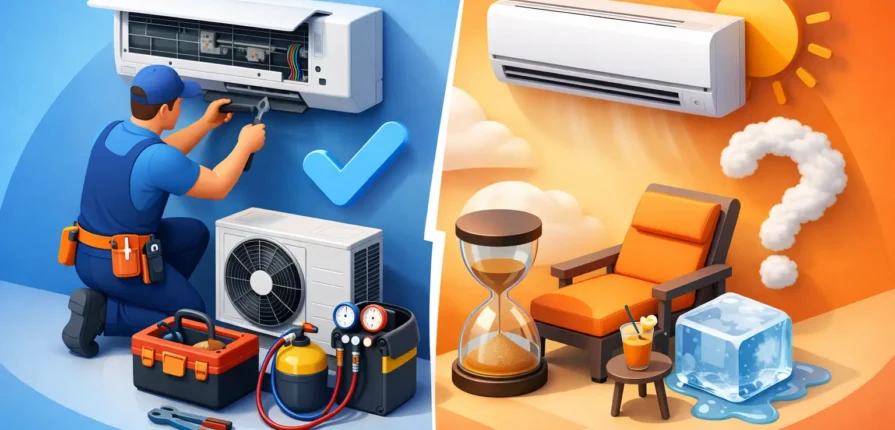
When your AC starts blowing warm air on a 90-degree Ohio afternoon, the question is not whether something is wrong. The question is how long you can afford to wait. Air conditioner repair is one of those jobs that gets more expensive the longer a problem is ignored, especially when a small issue starts putting strain on the rest of the system.
A lot of homeowners hope the unit will “kick back on” by itself. Sometimes it does. More often, that short period of weak cooling, odd noise, or constant cycling is the warning shot before a full breakdown. If you want to avoid losing comfort right when you need it most, it helps to know what your system is trying to tell you.
Common air conditioner repair signs homeowners notice first
Most AC problems do not start with a complete shutdown. They usually begin with performance changes that are easy to brush off for a few days or a few weeks.
Warm air from the vents is one of the most obvious signs. If the thermostat is set correctly and the system is running but your home still feels sticky or hot, something in the cooling process is not doing its job. Low refrigerant, a failing capacitor, frozen coils, compressor trouble, or restricted airflow can all cause that symptom.
Weak airflow is another common problem. You may hear the system turn on, but the air coming through the vents feels light and uneven. That could point to a clogged filter, blower motor issue, duct restriction, or evaporator coil problem. The exact repair depends on where the airflow is being lost.
Strange sounds matter too. A steady operating hum is normal. Banging, screeching, rattling, buzzing, or clicking are not. Those noises can mean loose parts, worn bearings, electrical trouble, or a component that is close to failing. The longer the system runs in that condition, the greater the chance of added damage.
Higher energy bills can also be an early warning. If your usage has not changed but your cooling costs have jumped, your AC may be working much harder to produce less comfort. That often means something is dirty, worn out, or failing.
What causes AC systems to break down
There is no single answer, because air conditioner repair covers a wide range of issues. Some are simple. Some are not. Age, maintenance history, system size, installation quality, and daily load all play a role.
Dirty filters are one of the most common causes of preventable trouble. A clogged filter restricts airflow, which can lead to frozen coils, poor cooling, and extra wear on the blower. It sounds basic because it is basic, but a neglected filter can create expensive problems.
Electrical parts fail regularly in older systems. Capacitors, contactors, relays, and wiring connections all take a beating during heavy summer use. A failing capacitor may cause hard starts or prevent the outdoor unit from starting at all. Electrical issues should be checked by a trained technician, because guessing around live components is not worth the risk.
Refrigerant problems are another major category. If your system is low on refrigerant, that usually means there is a leak. Topping it off without repairing the leak is a short-term patch, not a real fix. An accurate repair means finding the source, correcting it, and making sure the system is charged properly.
Drain line clogs can shut a system down as well. When condensation has nowhere to go, many systems trigger a safety switch to prevent water damage. Homeowners often think the AC has failed, when the real issue is moisture management.
Then there is simple wear and tear. Motors weaken. Coils get dirty. Belts, bearings, and fan parts wear down. If your system is older and has gone several seasons without service, breakdowns become more likely.
When air conditioner repair makes sense and when it may not
Not every broken AC should be replaced. Not every old unit should be repaired either. This is where an honest assessment matters.
If the system is relatively new, the repair is straightforward, and the rest of the equipment is in good condition, fixing it usually makes sense. A failed capacitor, clogged drain, bad contactor, or thermostat issue can often be repaired without turning the job into a major expense.
If the unit is 12 to 15 years old, uses older refrigerant, needs a costly compressor, or has a history of repeat problems, replacement may be the smarter long-term move. That does not mean every older system is done for. Some run well for years with proper care. But once repairs become frequent, you have to look at the total cost of ownership, not just the bill in front of you today.
Efficiency matters too. An aging unit that can still run may still cost you more every month than you realize. Sometimes a repair gets you through the season. Sometimes investing in a new system saves money and stress over the next several years. It depends on the condition of the system, the repair needed, and your plans for the property.
What to check before you call for AC repair
There are a few simple things worth checking before scheduling service. These basic steps can rule out small issues and help you give better information when you call.
Start with the thermostat. Make sure it is set to cool and that the temperature is below the current room temperature. If it uses batteries, replace them.
Next, check the filter. If it is dirty, replace it. Restricted airflow causes more problems than many people realize.
Look at the breaker if the system will not turn on. A tripped breaker does not always mean a serious issue, but if it trips again after reset, stop there and call a professional.
Check the outdoor unit for visible debris, grass buildup, or anything blocking airflow. Keep the area clear, but do not start opening panels or handling electrical parts.
If you see ice on the refrigerant line or indoor coil, shut the system off and call for service. Running it in that condition can make the problem worse.
Why fast diagnosis matters
A good repair visit is not just about replacing a bad part. It is about finding out why that part failed and whether anything else has been affected.
For example, replacing a capacitor may get the unit running again, but if the motor is drawing too much amperage, the new part may fail too. Clearing a drain line solves one issue, but if the system has poor airflow and excessive condensation, the clog may come back. Good technicians look at the whole operating picture.
That matters for homeowners and property managers alike. If you are responsible for tenants, family comfort, or business operations, speed matters. But so does accuracy. A rushed guess can turn into another service call a week later.
That is one reason many customers in Delaware, Lewis Center, Powell, and nearby communities look for a company that can respond quickly and handle more than one type of issue under the same roof. When HVAC trouble overlaps with electrical or drainage concerns, it helps to have a team that can solve the actual problem instead of passing you to someone else.
How regular maintenance reduces repair costs
The cheapest air conditioner repair is often the one you never need. That is where seasonal maintenance earns its keep.
A proper tune-up gives a technician a chance to inspect electrical components, clean coils, test controls, check refrigerant performance, clear drains, verify airflow, and catch weak parts before they fail under peak demand. It is not a guarantee against every breakdown, but it reduces your chances of getting surprised during the hottest week of the year.
Maintenance also helps with efficiency. A clean, properly adjusted system cools better and runs with less strain. That means lower utility costs and less wear on expensive parts.
For homes with older systems, maintenance is even more valuable. It helps you track condition over time and make better repair-versus-replace decisions before you are forced into an emergency.
Choosing the right company for air conditioner repair
When your house is hot, it is easy to focus on whoever can get there first. Speed matters, but it should not be the only thing that matters.
You want a company that communicates clearly, explains the problem in plain language, and gives you honest options. You also want technicians with real field experience, because AC systems rarely fail in neat textbook ways. Symptoms overlap. Multiple issues can happen at once. Good diagnosis saves time and money.
Flat-rate pricing, emergency availability, and a strong service record all matter. So does local knowledge. In central Ohio, AC systems deal with heavy summer demand, humidity swings, and a lot of wear from long run times. Repairs need to be made with those conditions in mind.
Professional Trade Service has built its reputation around that kind of practical, get-it-done approach. For homeowners and property managers, that means less guesswork and faster answers when comfort is on the line.
If your AC is making noise, running constantly, leaking, or failing to keep up, do not wait for a complete shutdown to make the call. A smaller repair handled at the right time is usually easier on your schedule, your budget, and your home.
Recent Comments