
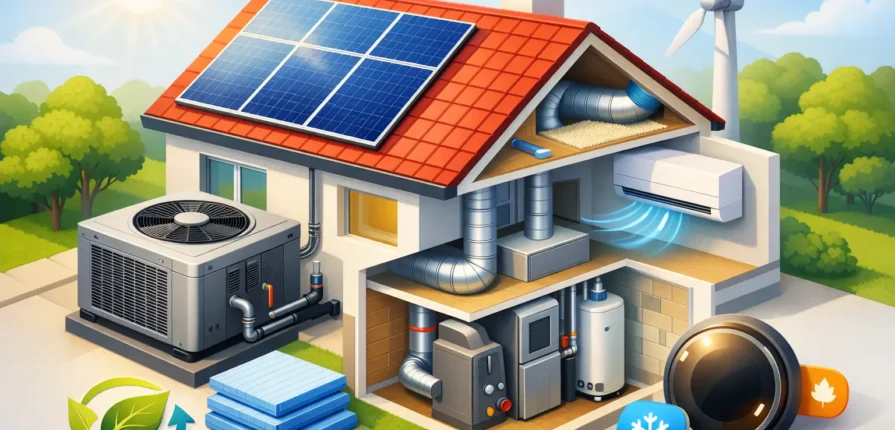
A high utility bill is not always a sign that your furnace or air conditioner has reached the end of the line. In many central Ohio homes, wasted energy comes from leaky ducts, poor airflow, outdated controls, or equipment that has not been maintained. The best HVAC upgrades for efficiency address the source of that waste, not just the symptom.
The right choice depends on your system’s age, the condition of your home, and how long you plan to stay there. A homeowner with a 10-year-old heat pump may get better results from duct work and controls than from replacing equipment. On the other hand, a 20-year-old furnace that needs frequent repairs may be costing more to keep than it is worth.
Start With Maintenance and Airflow
Before spending money on a major upgrade, make sure the system you have is operating correctly. A dirty filter, clogged coil, weak capacitor, worn blower motor, or incorrect refrigerant charge can make an otherwise solid system work harder than it should. Seasonal maintenance helps catch these issues before they turn into a no-heat or no-cooling call.
Airflow deserves the same attention. Your HVAC equipment moves conditioned air through every room, but it cannot do that efficiently when supply vents are blocked, return vents are undersized, or the blower is struggling. Uneven temperatures between rooms, hot upstairs areas in summer, and long run times are often airflow problems first.
A professional inspection can identify whether a repair, cleaning, adjustment, or equipment upgrade makes the most sense. This is usually a smarter first step than replacing parts based on a guess.
Seal and Improve Your Ductwork
Duct sealing is one of the best HVAC upgrades for efficiency when your home has accessible ductwork in an attic, basement, crawl space, or garage. Leaks allow heated or cooled air to escape before it reaches the rooms where you need it. They can also pull dusty, humid, or unconditioned air into the system.
Sealing connections and insulating ducts in unconditioned areas helps keep the air you paid to heat or cool inside the duct system. It can improve comfort in rooms that have always felt too warm or too cold, while reducing the strain on the furnace or AC.
Duct work is not a one-size-fits-all project. Some older homes have ducts that are too small, poorly routed, or damaged beyond a simple seal. In those cases, correcting a return-air issue or replacing problem sections may deliver a bigger improvement than sealing alone. A technician should inspect the full system before recommending changes.
Install a Programmable or Smart Thermostat
A thermostat upgrade is a practical option for many homeowners, especially if the current thermostat is old, inaccurate, or difficult to schedule. A programmable thermostat lets you lower heating demand while you are asleep or away, then bring the home back to a comfortable temperature when you need it.
Smart thermostats add features such as app control, scheduling assistance, filter reminders, and energy-use tracking. Those features can be useful, but the goal is still simple: stop heating and cooling an empty house at full speed.
There are trade-offs. Not every smart thermostat works with every HVAC system, particularly older systems, multi-stage equipment, heat pumps, or setups without a common wire. Some systems need an adapter or wiring changes. It is also possible to save very little if family members override the schedule every day. Choose controls that match how your household actually lives.
Upgrade to a High-Efficiency Furnace or Air Conditioner
When equipment is nearing the end of its service life, replacement can be the most meaningful efficiency upgrade. Modern furnaces, air conditioners, and heat pumps generally use less energy than units installed 15 to 20 years ago. They also offer better humidity control, quieter operation, and more consistent comfort when they are selected and installed correctly.
For furnaces, efficiency is measured by AFUE, or Annual Fuel Utilization Efficiency. A higher AFUE rating means more of the fuel you pay for becomes heat inside your home. For air conditioners and heat pumps, look at SEER2 ratings, which measure seasonal cooling efficiency.
Higher ratings can reduce operating costs, but the highest-rated unit is not automatically the best value. The price difference may not make sense for every home, especially if you plan to move soon or have low cooling demand. Equipment must also be sized correctly. An oversized air conditioner may cool quickly but shut off before it removes enough humidity. An undersized unit can run constantly during extreme weather.
A proper load calculation considers the home’s square footage, insulation, windows, layout, duct system, and more. Avoid choosing a replacement solely by matching the size of the old unit. Older equipment may have been oversized or undersized from day one.
Consider Variable-Speed Equipment
Variable-speed blowers, variable-capacity air conditioners, and variable-speed heat pumps can adjust output instead of running only at full power. This allows longer, gentler cycles that often improve comfort and humidity control.
These systems can be a strong fit for homeowners who deal with temperature swings, sticky summer air, or rooms that never seem to match the thermostat. They cost more upfront, however, and they work best when the duct system and installation are handled properly. A quality installation matters as much as the nameplate efficiency rating.
Look at a Heat Pump for Heating and Cooling
A heat pump provides both cooling in summer and heating during much of the winter by moving heat rather than creating it through combustion. Today’s cold-climate heat pumps can perform well in Ohio temperatures, and many homeowners pair one with a gas furnace in a dual-fuel setup.
In a dual-fuel system, the heat pump handles milder weather efficiently while the furnace takes over when temperatures fall far enough that gas heat becomes the better option. This approach can offer dependable comfort through changing seasons.
Whether a heat pump is the right upgrade depends on your existing fuel source, electric rates, insulation, current equipment, and budget. It is worth discussing when replacing both an aging AC and a furnace, but it may not be the best answer for every property.
Add Zoning Where It Solves a Real Problem
HVAC zoning uses separate thermostats and dampers to direct heating and cooling to different areas of the home. It can make sense for two-story houses, homes with finished basements, additions, large open spaces, or rooms with very different sun exposure.
Zoning can reduce waste by avoiding full conditioning in areas that are rarely used. It can also end the daily thermostat battle between upstairs and downstairs. Still, it should be designed carefully. Adding dampers to a system without considering airflow can create noise, pressure problems, or equipment stress. Some homes are better served by duct improvements or a ductless mini-split for a hard-to-condition room.
Do Not Ignore the House Around the System
HVAC equipment is only one part of the comfort picture. Air leaks around doors, attic penetrations, and windows can force a new system to work like an old one. Poor attic insulation allows heat to enter in summer and escape in winter. High indoor humidity can make a home feel warmer than the thermostat setting.
Addressing these building issues can reduce the size of equipment needed at replacement time. It also protects your investment by allowing the system to run shorter, more efficient cycles. For property managers, it can mean fewer tenant comfort complaints and lower operating costs over time.
Choose Upgrades in the Right Order
If your budget does not allow a full system replacement, start with the improvements that solve the actual problem. Maintenance, filtration, thermostat settings, and duct repairs often deliver immediate gains at a lower cost. If equipment is unreliable, inefficient, or facing a major repair, then replacement should be part of the conversation.
Professional Trade Service can inspect your heating and cooling system, explain what is causing the energy loss, and provide clear options without pushing an upgrade you do not need. The goal is a system that keeps your home comfortable through Ohio summers and winters without wasting energy every time it turns on.
The best next step is not picking the most expensive unit. It is getting an honest assessment of your equipment, ductwork, and home so your money goes toward the improvement that will make a real difference.
Recent Comments