
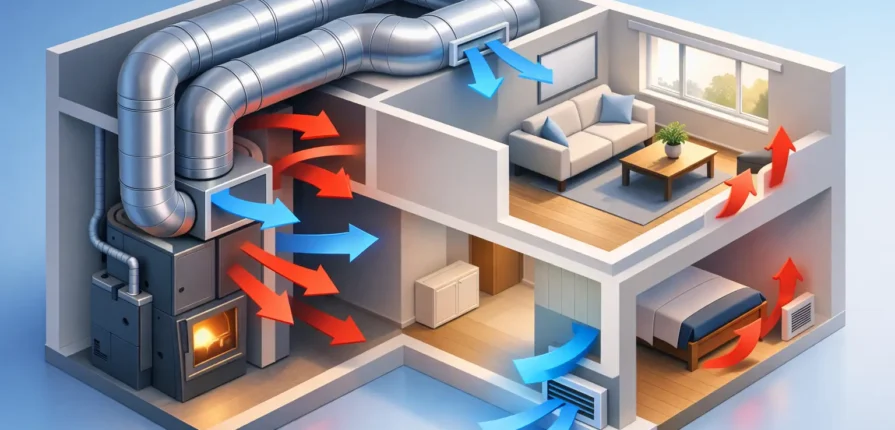
A furnace can be running, making heat, and still leave part of the house cold. When rooms take too long to warm up, certain vents barely blow, or the system seems louder than usual, restricted airflow is often the problem. Knowing how to improve furnace airflow starts with a few safe, practical checks – but it also means knowing when a small symptom points to a repair that needs professional attention.
Good airflow matters for more than comfort. Your furnace depends on a steady volume of air moving across its heat exchanger. When that airflow is restricted, the system has to work harder, cycles can become less efficient, and safety controls may shut the furnace down to prevent overheating. Addressing the cause early can help avoid a no-heat call on a cold Ohio night.
Start With the Furnace Filter
A dirty air filter is one of the most common causes of weak furnace airflow. It is also the easiest thing for most homeowners to correct. The filter catches dust, pet hair, and other debris before it reaches the blower and indoor components. Once it becomes clogged, it restricts the air your furnace needs to circulate.
Check the filter monthly during the heating season, especially if you have pets, smokers in the home, recent remodeling dust, or a busy household. Many 1-inch filters need to be changed every one to three months. Thicker media filters can often last longer, but the right schedule depends on the filter type, your home, and how often the system runs.
Make sure the new filter faces the right direction. The arrow printed on the filter frame should point toward the furnace or air handler, following the direction of airflow. Installing it backward can reduce performance and may allow the filter to bow or collapse.
Higher-rated filters can capture smaller particles, but more filtration is not always better for every system. A very restrictive filter may reduce airflow if the furnace was not designed for it. If you want better indoor air quality, ask an HVAC technician which filter rating your equipment can handle without putting extra strain on the blower.
Make Sure Supply and Return Vents Are Open
Walk through the house and check every supply register and return grille. Supply vents deliver heated air into the rooms. Return grilles pull cooler air back to the furnace to be reheated. Both need clear paths to do their job.
Closing vents in unused rooms may seem like a smart way to send more heat elsewhere, but it often creates the opposite result. Most residential duct systems are balanced for a certain amount of airflow. Closing too many registers increases pressure in the ducts and can make the blower work harder. It may also cause uneven temperatures, duct noise, and furnace overheating.
Keep supply registers fully open unless a technician has made a specific adjustment for your system. Move furniture, rugs, storage bins, curtains, and other obstructions away from vents and returns. A couch placed over a return grille can starve the system for air, while a bookcase blocking a supply vent can leave that room cold no matter how high you set the thermostat.
Return vents are particularly easy to overlook. They do not blow warm air, so homeowners sometimes cover them without realizing their role. Give return grilles several inches of open space, and vacuum visible dust from the grille surface as needed.
Check Simple Airflow Problems Around the House
Before assuming the furnace itself has failed, look for changes that affect the whole system. A blocked filter, closed vents, or a thermostat setting issue can create symptoms that feel like a major repair.
Pay attention to where the problem occurs. If every room has weak airflow, the issue may be at the filter, blower, main return duct, or furnace. If one or two rooms are consistently colder, the problem may be a disconnected duct, crushed flex duct, poor duct sizing, a damper setting, or inadequate insulation in that part of the home.
For homes with a basement, crawlspace, or accessible attic ductwork, you can look for obvious damage without taking anything apart. Watch for ducts that have come loose, sections that are bent or crushed, and large gaps around duct connections. Do not step through attic insulation or attempt to repair gas furnace components yourself. If you see duct damage, a professional can determine whether a proper repair, sealing, or redesign is needed.
Clean the Area Around the Furnace
Your furnace needs room to operate and to be serviced safely. Boxes, paint cans, laundry, and stored items near the equipment can restrict access, create a fire concern, and allow more dust to get pulled into the system.
Keep the area around the furnace clean and clear. If your furnace has an exterior combustion-air intake or PVC vent pipes, make sure snow, leaves, nests, and debris are not blocking them. A blocked intake or exhaust can lead to shutdowns and should be handled promptly.
Never remove furnace panels or try to bypass a safety switch to test airflow. Gas furnaces involve electricity, hot components, combustion gases, and carbon monoxide risks. If you smell gas, smell burning electrical wiring, or a carbon monoxide alarm sounds, leave the area if necessary and call for emergency help right away.
When the Blower Is the Real Problem
The blower motor is the part of the furnace that pushes air through the ductwork. If it is weak, dirty, failing, or set incorrectly, you may notice reduced airflow throughout the home even with a clean filter and open vents.
Signs of a blower-related problem include a furnace that starts but produces only a light stream of air, unusual humming or squealing, airflow that comes and goes, or a system that shuts off before the house reaches the thermostat setting. Older belt-driven blowers can develop worn belts, while newer variable-speed systems can have electrical, control, or motor issues.
A technician can check blower speed, motor amperage, capacitor performance, wheel cleanliness, and static pressure in the duct system. These tests matter because replacing a part without finding the restriction can waste money. For example, a dirty blower wheel can reduce airflow significantly, but increasing the blower speed without correcting a badly undersized return duct may create noise and shorten equipment life.
Ductwork Can Limit Furnace Airflow
Ductwork is often the hidden reason a furnace struggles to heat a home evenly. Leaky ducts lose heated air before it reaches the rooms you are paying to heat. Poorly designed ducts may also create excessive resistance that keeps the system from moving the airflow it was built to deliver.
Older homes, additions, converted garages, and finished basements are common places to find ductwork problems. A room added after the original HVAC system was installed may not have enough supply or return capacity. Long runs of flexible duct can also sag, kink, or become compressed over time.
Professional duct evaluation is especially worthwhile if you have ongoing hot-and-cold spots, high utility bills, loud rushing air, or repeat furnace limit switch issues. Depending on the findings, the right fix might be sealing connections, adding a return, repairing a damaged run, adjusting dampers, or modifying duct sizing. It depends on how the system was installed and what the home actually needs.
Do Not Ignore Short Cycling or Overheating
A furnace that turns on and off repeatedly may be short cycling. Restricted airflow is one possible cause because the furnace overheats and its safety limit switch shuts the burners down. The blower may keep running as the unit cools, then the cycle starts again.
Changing the filter and opening blocked vents can solve a simple restriction, but repeated short cycling needs a professional diagnosis. The issue could involve the blower, ductwork, heat exchanger, flame sensor, thermostat, venting, or an improperly sized furnace. Continuing to run an overheating furnace can lead to more extensive repairs.
Get Seasonal Maintenance Before Winter Does the Testing
A seasonal furnace tune-up gives a technician the chance to catch airflow concerns before they become a breakdown. Maintenance typically includes checking the filter and blower area, inspecting electrical connections, testing safety controls, verifying combustion performance, and looking for signs of duct or airflow restrictions.
For homeowners and property managers, regular maintenance is often less expensive and less disruptive than waiting for a cold-weather failure. It is also a good time to ask about rooms that never seem comfortable, odd noises, or changes in your heating bills. Those details help a technician narrow down the real cause.
If a clean filter and open vents do not restore normal airflow, do not keep turning up the thermostat and hoping for better results. A trained HVAC technician can measure what the system is doing, explain the problem plainly, and make the repair that gets heat moving where it belongs. Professional Trade Service is ready to help homeowners in central Ohio get dependable comfort back when their furnace is not keeping up.
Recent Comments