
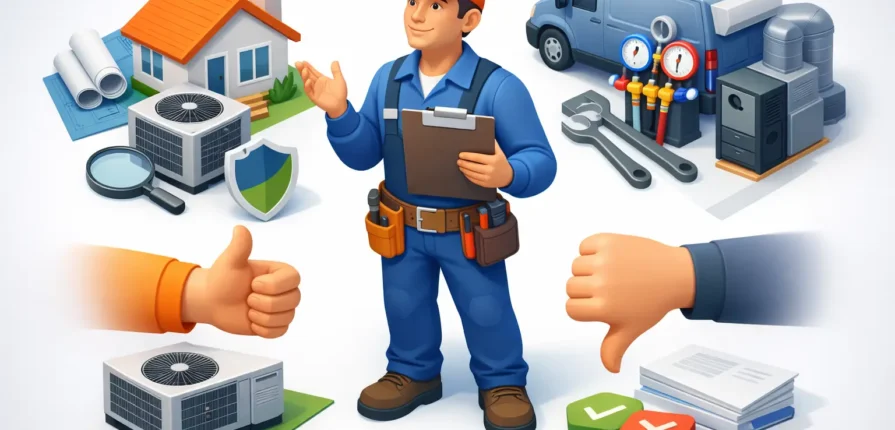
When your furnace quits on a cold Ohio night or your AC starts blowing warm air in July, you usually do not have time to sort through a dozen companies and hope you picked the right one. That is why knowing how to choose HVAC contractor services before an emergency happens can save you money, stress, and a lot of second-guessing.
A good contractor does more than show up with tools. They diagnose the actual problem, explain your options clearly, and stand behind the work. A bad one can leave you with repeat breakdowns, oversized equipment, weak airflow, or a repair bill that did not solve much of anything.
How to choose HVAC contractor without getting burned
Most homeowners start with price. That makes sense, but price alone is not a reliable filter. The lowest estimate can turn into the highest long-term cost if the contractor misses the root issue, uses poor installation practices, or pushes equipment that does not fit your home.
A better approach is to look at the full picture. You want a company with real experience, proper credentials, clear communication, and a reputation for showing up when it matters. If you own rental property or manage a commercial space, that reliability matters even more because downtime affects tenants, customers, and daily operations.
Start with licensing, insurance, and real experience
This is the baseline. If a company cannot clearly confirm that it is properly licensed and insured, move on. HVAC work affects comfort, safety, indoor air quality, and in some cases gas lines, electrical components, and ventilation. You do not want anyone guessing their way through that.
Experience matters too, but it helps to be specific about what kind of experience. A contractor who mainly swaps out equipment may not be as strong with diagnostics. One that handles both residential and light commercial systems may be better equipped to spot airflow problems, control issues, or recurring failures tied to the building itself.
Years in business are useful, but ask what they do every day. Do they handle repairs, system replacements, tune-ups, inspections, and emergency calls? A contractor who works across the full range of HVAC service usually has a better read on what fails, what lasts, and what is worth repairing.
Read reviews for patterns, not just stars
A five-star average looks nice, but the details tell the real story. Look for patterns in what customers say. Were technicians on time? Did they explain the repair in plain language? Did the final price match the estimate? Did the fix hold up?
Pay attention to how the company handles negative reviews too. Every contractor gets the occasional complaint. What matters is whether they respond professionally and try to make it right. That says a lot about how they operate when something does not go perfectly.
For homeowners in places like Delaware, Lewis Center, Sunbury, and nearby communities, local reputation carries weight. A company that has been serving the same area for years has more to lose by cutting corners.
Ask how they diagnose the problem
This is one of the easiest ways to separate solid HVAC companies from rushed ones. A good technician should inspect the system, test key components, and explain what failed and why. If someone gives you a big repair quote or recommends full replacement within minutes of arrival, slow down.
Sometimes replacement really is the right call. If your unit is older, uses outdated refrigerant, or has a major compressor or heat exchanger issue, repair may not make financial sense. But that decision should come after a real diagnosis, not a sales script.
A trustworthy contractor will usually give you context. They should tell you whether the repair is likely to buy you a few more solid years or whether you are putting money into a system near the end of its life. That kind of honesty matters.
Get clear on pricing before work begins
Nobody likes vague pricing, especially during an urgent repair. Ask whether the company offers flat-rate pricing, diagnostic fees, after-hours rates, and written estimates. You should know what you are approving before the work starts.
Be careful with quotes that seem dramatically lower than everyone else. Sometimes that means corners are being cut on labor, warranty support, or equipment quality. On the other hand, the highest quote is not automatically the best either. What you want is transparent pricing tied to a clear scope of work.
For replacement jobs, compare more than the bottom line. Look at equipment efficiency, warranty terms, labor coverage, and whether ductwork, thermostat upgrades, drain issues, or electrical needs are included. One quote may look cheaper because it leaves out important work.
How to choose HVAC contractor for installation work
Installation is where contractor quality really shows. Even good equipment can perform poorly if it is installed wrong. A system that is too large may short cycle and leave humidity problems behind. One that is too small may run constantly and still struggle to keep up.
A serious installer should ask questions about your home, comfort issues, utility costs, insulation, and existing ductwork. They should also take measurements and evaluate system sizing instead of replacing your old unit with the same size by default. That shortcut causes plenty of problems.
Ask about maintenance and long-term support
The best contractor is not just there for one repair. HVAC systems need ongoing care if you want fewer breakdowns and better efficiency. Ask whether the company offers seasonal tune-ups, maintenance agreements, filter reminders, and priority service.
This matters because the relationship after the job is often more important than the sale itself. If your system stops working on a weekend or during extreme weather, you want to know who will answer the phone. A company with emergency availability and a strong service department can save you a lot of trouble later.
That is one reason many customers prefer a full-service provider. If one trusted company can handle HVAC along with related electrical or plumbing issues, it cuts down on finger-pointing when problems overlap.
Pay attention to communication
Most people know a bad contractor when the work is already underway. Calls are not returned. Arrival windows are vague. Answers feel rushed. Paperwork is unclear. Those are not small issues. They usually point to how the job will be handled from start to finish.
A dependable HVAC contractor communicates in plain English. They explain what they found, what needs immediate attention, what can wait, and what each option will cost. They do not bury you in jargon or pressure you into a same-day decision unless there is a real safety issue.
Red flags that should make you walk away
A few warning signs come up again and again. Be cautious if a contractor refuses to provide written estimates, cannot verify insurance, recommends replacement without testing, or asks for unusually large upfront payments. High-pressure sales tactics are another bad sign.
You should also be wary of companies that dodge questions about warranties or who cannot explain why a repair is necessary. If the answer to every problem is a bigger invoice, trust your instincts and get a second opinion.
This is especially true for major replacement work. A reputable company should be comfortable with you comparing options. If they are trying to rush you before you understand the job, that is usually not a good sign.
What the right contractor should feel like
Choosing an HVAC company is not just about finding someone who can fix a unit. It is about finding a team you can trust when your home is uncomfortable, your tenants are calling, or your business cannot afford another delay.
The right contractor should make the process feel straightforward. They should be responsive, skilled, honest about what they see, and prepared to stand behind the work. If they have been doing this for decades, offer emergency service, and treat routine maintenance with the same seriousness as a no-heat call, that is usually a very good sign.
Professional Trade Service has built its reputation around that kind of practical, local support, and that is what homeowners should expect from any company they hire.
Before you book, take ten extra minutes to ask better questions. That small step can be the difference between a fast fix that lasts and a frustrating cycle of repeat calls, rising costs, and comfort problems that never really go away.
Recent Comments