
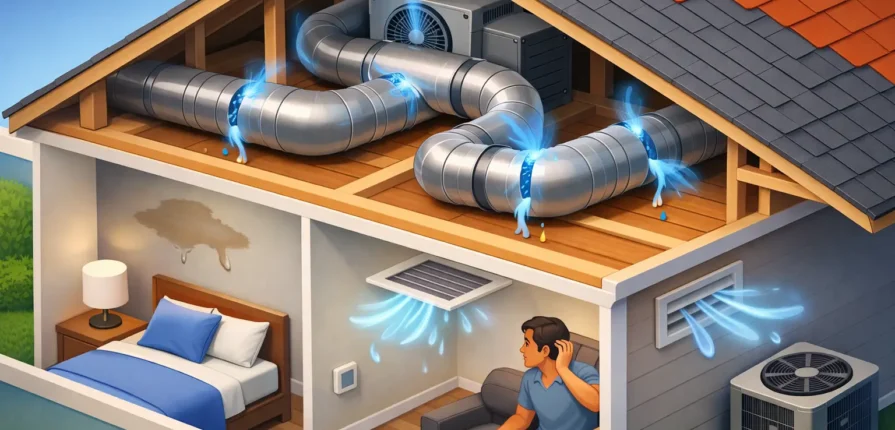
A room that never seems to match the thermostat setting is not always an air conditioner or furnace problem. In many central Ohio homes, the issue is hidden above the ceiling, behind walls, or in the attic. Knowing the signs of leaking HVAC ducts can help you address comfort problems before they turn into high utility bills, excess wear on your equipment, or a mid-season breakdown.
Ductwork carries heated and cooled air from your HVAC system to every room. When sections pull apart, develop holes, lose insulation, or have poorly sealed joints, conditioned air escapes before it reaches the living space. Your system then has to run longer to make up the difference.
1. Some Rooms Are Much Hotter or Colder Than Others
Uneven temperatures are one of the most common signs of leaking HVAC ducts. You may have a comfortable living room while a back bedroom stays stuffy in summer or feels chilly all winter. Second-floor rooms, rooms over a garage, and additions are especially likely to reveal duct problems.
A temperature difference does not automatically mean there is a duct leak. Sun exposure, poor insulation, undersized equipment, blocked registers, and thermostat placement can also contribute. Still, if the problem appears suddenly or has worsened over time, the duct system deserves a closer look.
2. Your Utility Bills Climb Without a Clear Reason
When conditioned air leaks into an attic, crawl space, basement, or wall cavity, you pay to heat or cool space that nobody uses. Even a small opening at a duct joint can add up over a long heating or cooling season.
Compare your bills with the same period last year, allowing for major weather differences and changes in household routines. A steady increase combined with comfort problems is a strong reason to have the full HVAC system inspected. Replacing a thermostat or adjusting settings will not fix air that is escaping before it reaches the room.
3. Airflow From Supply Vents Feels Weak
Put your hand near several supply vents while the system is running. If airflow feels noticeably weak in one area of the house, air may be leaking from the duct run that serves that room. A loose connection, crushed flexible duct, disconnected branch line, or damaged damper can all restrict what reaches the register.
Before assuming a leak, check the easy items first. Make sure registers are open and not blocked by rugs or furniture. Replace a dirty air filter if needed. If airflow remains weak after those basics are handled, a professional diagnosis can separate a duct issue from a blower, coil, or equipment problem.
4. The System Runs Longer Than It Used To
Your furnace or air conditioner should cycle on and off as it maintains the thermostat setting. If it seems to run for long stretches, especially during moderate weather, leaking ducts could be part of the problem. The system may be producing the right amount of heated or cooled air, but too little is making it into the home.
Long run times also put more strain on major components. That can mean additional wear on the blower motor, compressor, heat exchanger, and other parts that are not inexpensive to repair. Duct sealing is often a practical repair because it helps the equipment deliver the comfort it was designed to provide.
5. You Notice Dust, Insulation, or Musty Odors Near Vents
Return ducts are designed to pull air back to the HVAC system. If a return duct has a leak in an attic, crawl space, or unfinished basement, it can draw in dust, insulation fibers, damp air, and other contaminants from that area. You may notice more dust around registers or a stale, musty smell when the system starts.
This does not mean every odor is caused by duct leakage. A dirty filter, a clogged drain, moisture around equipment, or a duct cleaning need may be involved. But odors that are strongest near certain vents should not be ignored, particularly if they come with visible dust buildup or allergy symptoms.
6. You Can Hear Whistling, Rattling, or Air Moving Where It Shouldn’t
A faint rush of air near exposed ductwork may be normal. Loud whistling, popping, rattling, or a steady blowing sound in an attic, basement, or utility room is not something to brush off. It can point to a gap at a connection, a failing seal, or ductwork that is shifting as air pressure changes.
Accessible duct leaks are sometimes easy to identify, but repairs need to use the right materials. Standard cloth-backed duct tape dries out and fails over time. Professional repairs typically involve approved mastic sealant, proper foil tape, mechanical fastening when needed, and insulation replacement around ducts located in unconditioned spaces.
7. The Attic, Crawl Space, or Basement Feels Conditioned
If your attic feels unusually warm in winter while the furnace is running, or your crawl space feels cool during air conditioning season, conditioned air may be escaping nearby. This is a common clue when ductwork runs through unconditioned areas.
Leaking supply ducts waste heated or cooled air. Leaking return ducts can be just as troublesome because they pull in unconditioned air, dust, and humidity. In summer, a return-side leak can make it harder for the air conditioner to control indoor humidity, leaving the house cooler than outside but still clammy.
8. Ducts Are Visibly Disconnected, Damaged, or Poorly Insulated
A visual check can reveal obvious trouble in unfinished areas. Look for ducts that have separated at a collar, sagging flexible duct, torn outer jackets, crushed sections, missing insulation, or old tape peeling away from seams. Do not climb through an attic or crawl space if it is unsafe or difficult to access. A damaged ceiling, exposed wiring, poor footing, and extreme temperatures can turn a simple look into a risk.
Flexible duct needs support along its run. When it sags, bends sharply, or gets compressed, airflow drops even if there is no actual hole. The repair may involve reconnecting and sealing a joint, replacing damaged duct, improving support, or correcting an installation issue. The right solution depends on what the inspection finds.
9. Your HVAC Equipment Needs Frequent Repairs
Repeated repairs do not always mean the furnace or air conditioner is failing. An HVAC system that works harder because of duct leakage may cycle longer, struggle with airflow, and experience more stress than it should. If you have addressed equipment problems but the house still feels uneven and the bills remain high, ask for a duct evaluation.
This matters most with older systems. A homeowner may be told the equipment needs replacement when part of the comfort problem is really poor duct performance. A new system can be a good investment when it is properly sized and installed, but it should not be expected to overcome disconnected, undersized, or leaking ductwork on its own.
When to Schedule a Duct Inspection
A professional inspection is worthwhile when you have several symptoms at once: inconsistent temperatures, high bills, weak airflow, excessive dust, or long run times. It is also smart to inspect ducts after a remodel, rodent issue, water damage, or work performed in an attic or crawl space where ducts may have been moved.
During an evaluation, a trained technician can inspect accessible runs, test airflow, check equipment operation, look for return-side leaks, and identify insulation or connection failures. The goal is not to sell a repair that is not needed. It is to find the actual reason your system is not delivering comfort efficiently.
For homes in Sunbury, Lewis Center, Powell, and nearby communities, Professional Trade Service can assess both the HVAC equipment and the ductwork behind the problem. That full-system approach helps avoid guesswork when a room is uncomfortable or energy costs are climbing.
Do not wait for a small comfort issue to become a no-heat or no-cooling call. If your home is giving you more than one of these warning signs, have the duct system checked while there is time to make a straightforward repair and keep your family comfortable through the next weather swing.
Recent Comments