
A furnace that quits on a January night or an AC that gives out during a July heat wave usually does not fail without warning. In most cases, the warning signs were there first – weak airflow, higher utility bills, odd noises, short cycling, or rooms that never quite felt right. That is why Lewis Center HVAC maintenance matters. It gives homeowners a chance to catch small issues before they turn into expensive repairs or a full system replacement.
In central Ohio, your heating and cooling equipment has to work through humid summers, freezing winters, and plenty of in-between weather that still puts stress on the system. Routine maintenance is not about selling work you do not need. It is about keeping your equipment dependable, efficient, and safe so it is ready when you need it most.
Why Lewis Center HVAC maintenance pays off
Most homeowners call when something stops working. That makes sense. Comfort problems get your attention fast. But preventative maintenance is usually the cheaper move because it helps reduce emergency calls, avoid surprise breakdowns, and stretch the life of the equipment you already own.
A clean, adjusted system also runs better. When coils are dirty, filters are clogged, burners are out of adjustment, or electrical components are wearing down, your HVAC system has to work harder to do the same job. That extra strain can show up as rising energy costs and uneven temperatures around the house.
There is also the safety side. Gas furnaces, electrical parts, and aging components should be checked by trained technicians. A maintenance visit can uncover concerns that are easy to miss if you are only looking at the thermostat and hoping for the best.
What a maintenance visit should actually include
Good HVAC maintenance is more than a quick look and a filter swap. A proper service visit should involve inspection, testing, cleaning, and tuning based on the season and the type of equipment in your home.
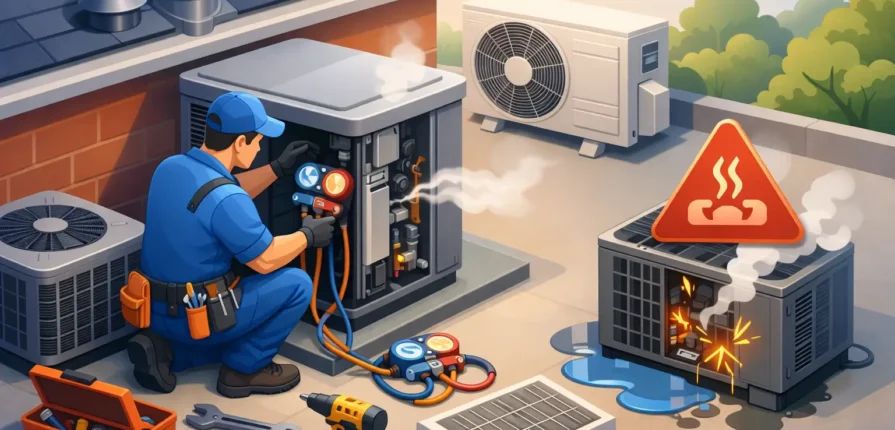
For air conditioning, that often includes checking refrigerant performance, cleaning the outdoor coil, inspecting electrical connections, testing capacitors and contactors, clearing the condensate drain, checking airflow, and verifying thermostat operation. If the system is struggling, a technician should tell you why in plain terms.
For heating equipment, maintenance usually means inspecting burners, checking ignition, testing safety controls, measuring system performance, examining the heat exchanger area, cleaning key components, and making sure airflow is not being restricted. Heat pumps need a different approach than furnaces, and older systems may need a closer look because normal wear can hide bigger problems.
That last part matters. Not every tune-up finds the same thing, because not every system is in the same condition. A five-year-old unit with a clean service history is different from a fifteen-year-old system that has missed two seasons of maintenance. The right technician will not treat those situations like they are identical.
The signs your system should not wait for the next checkup
Even if you stay on top of seasonal service, there are times when your HVAC system needs attention sooner. If your home starts heating or cooling unevenly, if the unit turns on and off too often, or if the airflow feels weak, something may already be off.
Strange noises are another warning sign. Banging, squealing, buzzing, or rattling can point to loose parts, failing motors, electrical trouble, or blower issues. Some problems are minor if caught early. If ignored, they can lead to much larger repairs.
Pay attention to your utility bill too. A sudden increase without a major weather change often means the system is losing efficiency. That does not always mean replacement is needed. Sometimes the fix is straightforward. Dirty coils, low airflow, worn components, or thermostat issues can all hurt performance.
If you smell something unusual, that deserves quick attention. A dusty smell at first startup can be normal, especially after a long off-season. A burning smell, gas odor, or anything sharp and chemical-like is different. In those cases, shut the system down and get it checked.
Seasonal timing makes a difference
The best time for AC maintenance is before the hottest stretch of summer. The best time for furnace maintenance is before cold weather settles in. That timing gives you a better chance of fixing wear-and-tear issues before the system is pushed to its limit.
Waiting until the first ninety-degree week or the first hard freeze can create delays, especially when every homeowner in the area is calling at once. Early service is not just convenient. It can help you avoid being stuck in line during peak demand.
There is a practical budget angle here too. Smaller corrections found during maintenance are often easier to manage than emergency repairs made after a complete failure. It is not always possible to prevent every breakdown, especially with older systems, but regular service improves the odds.
Lewis Center HVAC maintenance for older systems
Older equipment needs a more careful eye. That does not always mean it should be replaced right away. Some systems still have life left in them if they are maintained properly and repaired when needed. Others are costing the owner too much in efficiency loss, recurring service calls, or comfort problems.
This is where honest guidance matters. A no-nonsense HVAC company should be able to tell you when maintenance still makes sense and when repair money is starting to stack up in the wrong direction. Age alone is not the only factor. Repair history, energy use, system size, and overall condition all matter.
For property managers and homeowners trying to control costs, that kind of straight answer is valuable. You do not want a contractor pushing replacement when a solid repair will do. You also do not want to keep patching a failing unit if the numbers no longer make sense.
Maintenance is not just about the equipment
Your HVAC system does not operate in a vacuum. Airflow problems, duct issues, clogged drains, thermostat errors, insulation gaps, and even minor electrical concerns can affect performance. That is one reason maintenance from a full-service company can be useful. Sometimes the comfort issue is connected to more than one trade.
For example, a tripped breaker, failing disconnect, or thermostat wiring problem may look like an HVAC failure at first. Drainage issues near an air handler can also create moisture concerns that lead to bigger trouble if ignored. Looking at the system as part of the whole home gives you a better shot at solving the real problem instead of just treating the symptom.
What homeowners can do between service visits
There are a few things you can handle on your own, and they help more than people think. Change filters on schedule, keep supply and return vents open and clear, and make sure the outdoor unit is free of heavy debris, grass buildup, and overgrown landscaping.
It also helps to pay attention to how the system sounds and cycles. If something changes, do not wait months to mention it. Catching a problem early can be the difference between a minor repair and a weekend emergency call.
That said, maintenance has limits as a do-it-yourself job. Cleaning internal components, testing electrical parts, checking refrigerant performance, and verifying combustion safety are best left to trained technicians. HVAC systems are not a place to guess.
Choosing the right HVAC maintenance company in Lewis Center
When you are comparing providers, look for experience, clear communication, and a company that explains findings without pressure. Flat, honest pricing matters. So does showing up on time, doing the work thoroughly, and being available when routine service turns into an urgent repair.
A local company that handles maintenance, repairs, installations, and emergency calls can usually give better long-term guidance because they see the full picture. They know what systems tend to struggle in this area, what seasonal demands are common, and how to help homeowners plan ahead instead of reacting after a breakdown.
Professional Trade Service has built its reputation around that kind of straightforward service – keeping homes and businesses comfortable without wasting time or overselling what is not needed.
If your system has been running harder than it should, making odd noises, or simply has not been checked in a while, now is a good time to get ahead of it. A little maintenance at the right time can save you from a much bigger problem when the weather stops being forgiving.
Recent Comments